At the start of every November, the Scorpio Races are held. Riders fight to hold onto their water horses long enough to finish the race, and for some, the race proves fatal. Sean Kendrick is the three-time returning champion, desperate to win the race in order to finally have enough money to buy the horse he rides. Puck Kendrick, the first girl ever to enter the race, and with huge odds against her, also has reasons to win. The prize money would give her and her brother enough money to pay the debt on their house, and to live a more comfortable life. In a day where nothing is guaranteed, neither are prepared for what is going to happen.
The new book by Maggie Stiefvater is completely different, but just as incredible as her recently completed Mercy Falls Trilogy. Based on the myth of the Water Horses- an ancient breed of cannibal horses born from the ocean, Maggie has taken this legend and made it completely her own. The writing is what we've come to expect from her. It's lyrical and spellbinding, and so beautiful to read. I found the story a bit slow to get started, but once the true preparation for the race began, the book was impossible to put down.
Sean and Puck were both likeable and emotionally engaging characters. There is no doubt of Sean's complete devotion to the horses he trains, and he can rival the Horse Whisperer in his ability to handle and calm them when no one else can. The race isn't about glory and fame. It isn't really even about the money- except as a means to finally getting his heart's desire.
Puck is fierce, strong and determined, and I loved her doggedness. There were so many obstacles against her, not the least of which was the fact that she had to ride her timid and gentle mare, and the real possibility that she and the horse could be killed in the race. Then there's the fact of her being a girl, and no girl has ever ridden in the Scorpio Races, nor should one (according to the islanders). for her also has nothing to do with glory, and everything to do with keeping her family together.
If there is anything to criticize about this book, and I'll concede that it could have just been me, it's that I didn't feel enough of a distinction between the voices. I frequently lost track of who was narrating, and I would have liked for that to have been a bit more obvious.
Other than that, I loved it, and the author actually succeeded making me bawl my eyes out at the end, and no matter how touching, it takes a lot for me to have that kind of response. I also really liked that the story didn't simply become a romance between the two characters. Yes, a relationship develops between Puck and Sean- that was inevitable, the romance is quite innocent and sweet, and the book is really about much more than that. It's about family bonds, courage, love and the loyalty and devotion that man and animal can have for one another.
The book doesn't release until October, but when it does, make sure to rush to your local book store or library and grab your copy. It's absolutely one you're going to want to read.
Everything to do with children's books from reviews to commentary on children's publishing.
Welcome
Welcome to my blog. I often think I was born with a book in my hand. I have always enjoyed reading, but more importantly, talking about books. This blog is partially about reviews, but is really a forum to talk about what I'm reading, and express all of the thoughts and feelings that there simply isn't room for in a professional review. I look forward to hearing your thoughts on your favourite books as you follow my reading journey.
Sunday, September 11, 2011
Friday, September 9, 2011
Please Ignore Vera Dietz: A Not-So-Ignorable Read
18 year old Vera Dietz has spent most of her life secretly in love with her best friend and next door neighbour Charlie Kahn. Over the years, she's learned a lot about him and kept his secrets- even after he betrays her and ruins everything. When Charlie dies under mysterious circumstances, Vera is racked with grief and guilt. She knows more about what happened that night than anybody, but does she have the courage to come forward with what she knows and clear his name?
I've been hearing about this book for quite some time. It was recommended in an SLJ YA Fic webinar, it won a Printz-Honor, and it's been all over the list-servs. I'd been meaning to read it, but other books just kept getting in the way. Finally, I picked it up, and I couldn't put it down.
The story is narrated primarily by Vera, who is smart, witty, and extremely likeable. She does well in school, holds down a full-time job at Pagoda Pizza, and is essentially a down-to-earth, responsible kid. Except for the fact that she's drinking a bit too much, having a questionable romance with an older co-worker, and she's she's keeping an important secret about her best-friend Charlie's death that's eating her up inside. Oh yes- and she's being haunted by numerous Charlie's who won't leave her alone until she clears his name. You might be wondering how a girl with all of these problems can possibly be described as responsible and likeable, but trust me- once you start reading, you'll get it. Other narrators include "The Dead Kid" (Charlie), Vera's Dad and The Pagoda (a former country club and popular "parking" spot for local teens), who all offer additional insight into Vera.
The thing I love most about these additonal voices was how unique and unusual they are. It's not often that an inatimate object offers its perspective, and you might think it would be a bit strange, but it works. The Pagoda has been around for decades, and it's a lot like that wise old town member who just knows everybody and everything. Of all the voices, it's the most objective, and the most detached, and it's the only one without a vested interest in Vera. Charlie, who speaks posthumously, is watching over Vera, and trying to get her to clear his name. Through flashbacks, readers will get a sense of Charlie's life up until he died, and will understand how and why his friendship with Vera went so wrong.
Vera's dad is also a complex character, and the author really explores how being an extremely young and single father has impacted the way they interact. Vera's mom is like the big elephant in the room. She left when Vera was 12, and neither of them have ever gotten over it or discussed it. In fact, his whole philosphy is ignore, ignore, ignore, thinking somehow that if he doesn't acknowledge something then it will go away. He deals with life by making flow charts, and he is doing his best to try and help Vera avoid making the same mistakes that he did.
In the midst of all of the drama, there is also still a big mystery- what actually happened on the night that Charlie died? Right off the bat, we learn that whatever happened, most people believe that Charlie did it. But he didn't, and Vera is the only one who knows what really happened, but that won't become clear until the end of the novel, and the author masterfully teases readers with little snippets of information before all eventually is explained.
I really can't recommend this book enough. It's quirky, clever and highly original, not to mention well-written. From reading the plot summary, it might sound like it's a dark and depressing novel, but it isn't nearly as dark as you might think. There are some heavy issues being covered there, but there are also comical moments to lighten the mood. Some mature content such as drinking, sex, and abuse push this to the high school end of the YA spectrum, but it's the kind of book that I know teen readers will love.
I've been hearing about this book for quite some time. It was recommended in an SLJ YA Fic webinar, it won a Printz-Honor, and it's been all over the list-servs. I'd been meaning to read it, but other books just kept getting in the way. Finally, I picked it up, and I couldn't put it down.
The story is narrated primarily by Vera, who is smart, witty, and extremely likeable. She does well in school, holds down a full-time job at Pagoda Pizza, and is essentially a down-to-earth, responsible kid. Except for the fact that she's drinking a bit too much, having a questionable romance with an older co-worker, and she's she's keeping an important secret about her best-friend Charlie's death that's eating her up inside. Oh yes- and she's being haunted by numerous Charlie's who won't leave her alone until she clears his name. You might be wondering how a girl with all of these problems can possibly be described as responsible and likeable, but trust me- once you start reading, you'll get it. Other narrators include "The Dead Kid" (Charlie), Vera's Dad and The Pagoda (a former country club and popular "parking" spot for local teens), who all offer additional insight into Vera.
The thing I love most about these additonal voices was how unique and unusual they are. It's not often that an inatimate object offers its perspective, and you might think it would be a bit strange, but it works. The Pagoda has been around for decades, and it's a lot like that wise old town member who just knows everybody and everything. Of all the voices, it's the most objective, and the most detached, and it's the only one without a vested interest in Vera. Charlie, who speaks posthumously, is watching over Vera, and trying to get her to clear his name. Through flashbacks, readers will get a sense of Charlie's life up until he died, and will understand how and why his friendship with Vera went so wrong.
Vera's dad is also a complex character, and the author really explores how being an extremely young and single father has impacted the way they interact. Vera's mom is like the big elephant in the room. She left when Vera was 12, and neither of them have ever gotten over it or discussed it. In fact, his whole philosphy is ignore, ignore, ignore, thinking somehow that if he doesn't acknowledge something then it will go away. He deals with life by making flow charts, and he is doing his best to try and help Vera avoid making the same mistakes that he did.
In the midst of all of the drama, there is also still a big mystery- what actually happened on the night that Charlie died? Right off the bat, we learn that whatever happened, most people believe that Charlie did it. But he didn't, and Vera is the only one who knows what really happened, but that won't become clear until the end of the novel, and the author masterfully teases readers with little snippets of information before all eventually is explained.
I really can't recommend this book enough. It's quirky, clever and highly original, not to mention well-written. From reading the plot summary, it might sound like it's a dark and depressing novel, but it isn't nearly as dark as you might think. There are some heavy issues being covered there, but there are also comical moments to lighten the mood. Some mature content such as drinking, sex, and abuse push this to the high school end of the YA spectrum, but it's the kind of book that I know teen readers will love.
Tuesday, August 30, 2011
Waiting For the Magic: A heartwarming & enchanting story
When William's father leaves, his mother takes him and his sister to the local animal shelter, seeking to fill the void created by his absence. Instead of just one animal, they adopt 4 dogs and a cat. As if by magic, four-year-old Elinor can understand and talk to the animals. Will would like to experience the magic for himself, but can he be as brave and as strong as he needs to be to believe?
Patricia MacLachlan has a really wonderful way with words, and this book is further demonstration of her talent. What I love most about her writing is that she conveys complex ideas with simple and sparing language, and there's no extra padding.
More than just talking animals, the pets (mostly the dogs) act as a kind of chorus, frequently interrupting Will's narrative to provide commentary on the things he doesn't tell you. The pets are wise, thoughtful and funny, and at first, only Elinor can understand them. This, according to the dogs, is because she's four, and four-year-olds understand everything.
As four-year-olds tend to be, Elinor is a little sponge, and she absorbs, and acts on what she sees and hears. I couldn't help but smile at her ongoing list of bad "woods" as she calls them, and how quickly she picks up on the idea that her father is flawed. When he finally calls to speak to them, doesn't hesitate to tell him off, and she has a kind of matter-of-fact way about her.
Will is grieving for his father, but pushes the hurt deep down inside of him and doesn't talk about it so he won't upset his mother or sister. In fact, nobody is talking about it at all, and only the dogs understand what's really going on.
There are some very funny moments, and some very serious moments. There were parts that made me laugh out loud, and yes- points in the story where I was moved to tears. It really is a special read, and I liken it to books like Eggs by Jerry Spinelli or Laurel Snyder's new book Bigger Than a Breadbox but for a slightly younger audience.
My only criticism of this novel is that it's one of those books that is difficult to place. The cover illustration and the format suggest a book for early readers (7-9 years old) but it just feels a bit too sophisticated to be properly read and understood by kids that young. The language is lyrical and poetic, and whether you read it on your own, or read it with kids, you will come away from it being thoroughly enchanted.
Monday, August 22, 2011
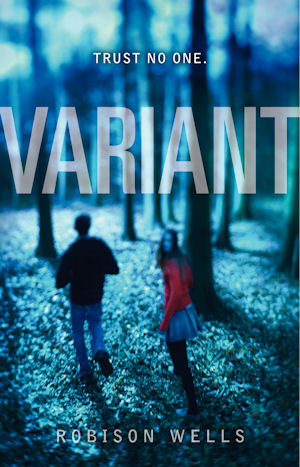
Variant: A Sci-Fi Thrill-Ride
Benson Fisher thought that Maxwell Academy would be the answer to all of his problems. A Foster Kid, bounced from home to home, he's looking forward to attending a good school where he can make friends, study, and participate in extra-curricular activities. It sounds perfect right? WRONG! What Benson finds when he arrives is a building surrounded by a razor-wire fence from which nobody ever leaves. A place run entirely by students divided into three factions. A place where breaking the rules equals death. When Benson stumbles on the real secret behind the school, he realizes that escape- his best chance for survival- may just be impossible.
The world of Maxwell Academy is combination of Lord of the Flies, Maze Runner, and the Escape From Furnace series. Run entirely by the students, the only thing they know is that the creators of the school are always watching, and nobody comes back from detention. Benson knows that something strange is going on and constantly thinks about escape, but he's conflicted. As part of the Variant Faction, he starts making friends and feeling like he fits in somewhere. On the other hand, there is a lot about Maxwell that doesn't make sense, and Benson's got more questions than answers. (As will the readers) Who is actually behind Maxwell Academy, and what is its purpose? What happens to the students who get detention? Are they really killed as the others believe? And most importantly, what is it that everyone's so afraid of, and why doesn't anybody ever manage to escape?
WOW! It's rare that a book can keep surprising me to the last page, but Robison Wells managed to do just that. The atmosphere is tense, creepy, and unsettling, and just when you think you've figured something out, Wells throws in another twist. And then, when you think you finally know where the story is going, it takes another crazy turn. It's like a perpetually changing maze that's impossible to map, and yet, it all makes sense and it works. It's fast-paced, thrilling, edge-of-your-seat good, and boys in particular are going to eat this up. Not only does it end on a cliff-hanger, but it ends with another twist that I'm positive you won't see coming!
I only regret that the pub date isn't until October, because it means that much longer a wait for book two in this amazing new series.
The world of Maxwell Academy is combination of Lord of the Flies, Maze Runner, and the Escape From Furnace series. Run entirely by the students, the only thing they know is that the creators of the school are always watching, and nobody comes back from detention. Benson knows that something strange is going on and constantly thinks about escape, but he's conflicted. As part of the Variant Faction, he starts making friends and feeling like he fits in somewhere. On the other hand, there is a lot about Maxwell that doesn't make sense, and Benson's got more questions than answers. (As will the readers) Who is actually behind Maxwell Academy, and what is its purpose? What happens to the students who get detention? Are they really killed as the others believe? And most importantly, what is it that everyone's so afraid of, and why doesn't anybody ever manage to escape?
WOW! It's rare that a book can keep surprising me to the last page, but Robison Wells managed to do just that. The atmosphere is tense, creepy, and unsettling, and just when you think you've figured something out, Wells throws in another twist. And then, when you think you finally know where the story is going, it takes another crazy turn. It's like a perpetually changing maze that's impossible to map, and yet, it all makes sense and it works. It's fast-paced, thrilling, edge-of-your-seat good, and boys in particular are going to eat this up. Not only does it end on a cliff-hanger, but it ends with another twist that I'm positive you won't see coming!
I only regret that the pub date isn't until October, because it means that much longer a wait for book two in this amazing new series.
Saturday, August 20, 2011
The Candymakers: A Sweet & Satisfying Middle Grade Read
In the town of Spring Haven, four twelve-year-olds have been selected to compete in a national candy-making contest to create the most scrumptious candy in the country. There is Logan, the candy maker's son, who has spent most of his life sheltered inside the factory, and worries about whether or not he has what it takes to follow in his father's and grandfather's footsteps and win. Next is Miles- an unusual boy who is allergic to seemingly everything, and has an odd fascination with the afterlife. Daisey is a perky and cheerful girl who can pull taffy like it's a feather. And finally, there is Phillp- an over-achieving, suit-wearing boy who is always scribbling in a secret notebook. Each of them has their own reasons for being there, but as readers will discover, they are not what they would expect.
Wendy Mass is one of my favourite middle grade authors, and I always make a point of reading her new books when they come out. I've yet to be disappointed. She's one of those writers who really understands what being a tween (11-12-13) is like, and perfectly captures that in her books.
The Candymakers alternates between the four perspectives of the different kids, but with a third person narrator. I really enjoyed the third person in this case, because the narrator was able to provide a wider insight into the characters than first person would have. Wendy Mass begins the book with Logan's story, but in an interesting twist, warns readers to pay close attention to what he doesn't tell you in his narrative. This ends up being sound advice, because as it turns out, there is a great deal that these characters aren't telling readers but is revealed through the observations of the other characters.
The characters in this book are wonderful. They are intelligent, talented, multi-faceted, vulnerable and mysterious, and are connected in unexpected ways. I also loved how they bonded with each other and developed a genuine friendship. Regardless of who they are, or where they came from, what they each needed most was the one thing none of them seemed to have- a friend.
There are several mysteries that unfold over the course of the story, and only those who pay close attention will figure out how all of the pieces fit together. Readers will also enjoy imagining themselves in the contest around all of those sweet confections, and dreaming up their own special candy in the process.
Wendy Mass is one of my favourite middle grade authors, and I always make a point of reading her new books when they come out. I've yet to be disappointed. She's one of those writers who really understands what being a tween (11-12-13) is like, and perfectly captures that in her books.
The Candymakers alternates between the four perspectives of the different kids, but with a third person narrator. I really enjoyed the third person in this case, because the narrator was able to provide a wider insight into the characters than first person would have. Wendy Mass begins the book with Logan's story, but in an interesting twist, warns readers to pay close attention to what he doesn't tell you in his narrative. This ends up being sound advice, because as it turns out, there is a great deal that these characters aren't telling readers but is revealed through the observations of the other characters.
The characters in this book are wonderful. They are intelligent, talented, multi-faceted, vulnerable and mysterious, and are connected in unexpected ways. I also loved how they bonded with each other and developed a genuine friendship. Regardless of who they are, or where they came from, what they each needed most was the one thing none of them seemed to have- a friend.
There are several mysteries that unfold over the course of the story, and only those who pay close attention will figure out how all of the pieces fit together. Readers will also enjoy imagining themselves in the contest around all of those sweet confections, and dreaming up their own special candy in the process.
Wednesday, August 10, 2011
What is Real: An Edgy & Surreal Teen Read
Seventeen-year-old Dex Pratt, a star basketball player and budding filmmaker has had his life turned upside down. His mother has re-married, his father tried to commit suicide, failed and is wheelchair bound, and now Dex has had to move back to his small B.C. town to care for him. When he gets there, he finds everything has changed beyond recognition. Gone is the house, the cars, the fancy bikes and the toys. They've been replaced with a rotting rented house on the back of a cornfield. His father too has changed. He's given up his law practice, and instead of defending marijuana growers, he has become one. Unable to cope, Dex smokes himself into a state of surrealism, and begins to lose touch with reality, causing him to finally question: What is real?
Firstly, I'll say I love Karen Rivers' YA material, and I don't think I've read something that makes use of this kind of storytelling recently. Told from Dex's point of view, he narrates with blunt, stream-of-conciousness style, often interrupting with flashback movie scenes from a director's perspective. The flashbacks fill in the details of what Dex doesn't tell you, but his own perceptions of reality and fantasy are so blurred, it can be difficult to tell whether or not it is true. In fact Dex is the epitome of the unreliable narrator, frequently contradicting himself or outright lying. What I find interesting is that they are directed more at Dex himself than the reader. I got the sense that Dex was constantly revising and reconstructing his life, trying to form it into a believable fiction that he can live with. There are a lot of things that Dex will tell you, and a lot of things he won't, and making sense of how the pieces fit together is part of the challenge of this book
The secondary characters are far less developed, but since Dex is telling the story, I'm ok with this. These people may or may not even exist, and if they do, readers only see them through a drug-induced distored view. Yes, they all impact his life in different ways good and bad, but they are more like the blurred images of people that we sometimes see in our dreams than concrete characters.
This isn't an easy book to read in the literal or emotional sense. Time jumps around in Dex's mind, and therefore isn't a linear plot. There is also liberal drug use and a great deal of swearing, which makes it more ideal for older teen readers. Emotionally, Karen Rivers challenges readers to think about their own perceptions of reality, to think about the validity and reliabilty of memory, and most of all, to ask the question that makes up the title of this book- what is real?
Firstly, I'll say I love Karen Rivers' YA material, and I don't think I've read something that makes use of this kind of storytelling recently. Told from Dex's point of view, he narrates with blunt, stream-of-conciousness style, often interrupting with flashback movie scenes from a director's perspective. The flashbacks fill in the details of what Dex doesn't tell you, but his own perceptions of reality and fantasy are so blurred, it can be difficult to tell whether or not it is true. In fact Dex is the epitome of the unreliable narrator, frequently contradicting himself or outright lying. What I find interesting is that they are directed more at Dex himself than the reader. I got the sense that Dex was constantly revising and reconstructing his life, trying to form it into a believable fiction that he can live with. There are a lot of things that Dex will tell you, and a lot of things he won't, and making sense of how the pieces fit together is part of the challenge of this book
The secondary characters are far less developed, but since Dex is telling the story, I'm ok with this. These people may or may not even exist, and if they do, readers only see them through a drug-induced distored view. Yes, they all impact his life in different ways good and bad, but they are more like the blurred images of people that we sometimes see in our dreams than concrete characters.
This isn't an easy book to read in the literal or emotional sense. Time jumps around in Dex's mind, and therefore isn't a linear plot. There is also liberal drug use and a great deal of swearing, which makes it more ideal for older teen readers. Emotionally, Karen Rivers challenges readers to think about their own perceptions of reality, to think about the validity and reliabilty of memory, and most of all, to ask the question that makes up the title of this book- what is real?
Friday, August 5, 2011
The Unwanteds: A Magical Middle-Grade Debut
Every year in the Quill, 13-year-olds are sorted into three categories: Wanted, Necessary, and Unwanted. Naturally, Wanteds get the education, the plum jobs, and money. Necessary's get no special treatment, but are the working class, doing all of the lowly jobs that need to get done. And then there are the Unwanteds. Unwanteds are creative and artistic- qualities which have no value to the Quill society, and are sent to a special farm for elimination. Alex and Aaron are twins. Straight-laced Aaron is classified as Wanted, and immediately rises to the top. Alex on the other hand is Unwanted, and is marked for elimination.
Upon arrival at the "Death Farm", Alex discovers an amazing secret. The farm is actually a magical mirage, and behind it lies a magical world called Artime. In Artime, children are encouraged to foster their creative talents, and are sorted into disciplines to cultivate their magical abilities.
Life in Artime is almost perfect. Alex quickly makes friends, and everything he could ever imagine is at his fingertips. But- it's highly unusual for twins to be separated, and Alex's quest to be reunited with his brother results in a magical battle for the survival of Artime, and forces them both to choose sides once and for all.
In her middle-grade debut, Lisa McMann has created a rich, and vivid magical world that young readers will appreciate and enjoy. The world of Quill is literally all work and no play. There is no place for creativity or imagination, and life is colourless and strictly monitored by the government to keep it that way Inspired by the ongoing cuts being made to school arts programs around the U.S, the Quill is an extreme example of what life would be like without the arts.
Artime, on the other hand nearly rivals Hogwarts as a magical school for children, and I was reminded of Harry Potter several times while reading it. Children take only subjects that interest them, everything they can dream of is available to them, and entire sections of the world only exist when they are needed to save room. Unlike in Harry Potter, however, the students don't immediately begin magical training- first they have to find their artistic aptitude, as this is where the magic comes from. This was an element of the story that I particularly enjoyed, and kids will love the idea of creating weapons out of origami or reciting a Shakespearian soliloquy to put your opponent to sleep. But don't worry- even though there is ultimately a war, the violence is nominal and not especially scary.
The character of Alex is well-developed, and like Harry Potter, he is a boy who does not fit into his existing world, but really finds himself in his magical surroundings. The path isn't easy, however, and he will experience ups and downs with his new friends as most children do. When it seems like his friends are succeeding and leaving him behind, he becomes sullen and jealous, and increasingly brooding. McMann also charmingly deals with the subject of first crushes, and when one of the girls starts playing tricks on him, he doesn't realize that it's because she likes him- or that he likes her too. I also liked the twin aspect of the book (I so wanted to be a twin when I was a kid) and the connection that Alex just can't seem to let go of. Aaron also has a great deal more depth to him than what initially is obvious, and while he's not as noble-hearted as Alex, he's not purely evil either.
The publisher is referring to this as a dystopian novel, and to some degree it is, but I'd push it more towards dystopian fantasy or fantasy with dystopian elements. The plot moves quickly, the writing is solid, and as either a gentle introduction to the genre, or as a fantastical read for Harry Potter fans, The Unwanteds will absolutely hit all the right notes with its readers. Recommended for ages 9+.
Upon arrival at the "Death Farm", Alex discovers an amazing secret. The farm is actually a magical mirage, and behind it lies a magical world called Artime. In Artime, children are encouraged to foster their creative talents, and are sorted into disciplines to cultivate their magical abilities.
Life in Artime is almost perfect. Alex quickly makes friends, and everything he could ever imagine is at his fingertips. But- it's highly unusual for twins to be separated, and Alex's quest to be reunited with his brother results in a magical battle for the survival of Artime, and forces them both to choose sides once and for all.
In her middle-grade debut, Lisa McMann has created a rich, and vivid magical world that young readers will appreciate and enjoy. The world of Quill is literally all work and no play. There is no place for creativity or imagination, and life is colourless and strictly monitored by the government to keep it that way Inspired by the ongoing cuts being made to school arts programs around the U.S, the Quill is an extreme example of what life would be like without the arts.
Artime, on the other hand nearly rivals Hogwarts as a magical school for children, and I was reminded of Harry Potter several times while reading it. Children take only subjects that interest them, everything they can dream of is available to them, and entire sections of the world only exist when they are needed to save room. Unlike in Harry Potter, however, the students don't immediately begin magical training- first they have to find their artistic aptitude, as this is where the magic comes from. This was an element of the story that I particularly enjoyed, and kids will love the idea of creating weapons out of origami or reciting a Shakespearian soliloquy to put your opponent to sleep. But don't worry- even though there is ultimately a war, the violence is nominal and not especially scary.
The character of Alex is well-developed, and like Harry Potter, he is a boy who does not fit into his existing world, but really finds himself in his magical surroundings. The path isn't easy, however, and he will experience ups and downs with his new friends as most children do. When it seems like his friends are succeeding and leaving him behind, he becomes sullen and jealous, and increasingly brooding. McMann also charmingly deals with the subject of first crushes, and when one of the girls starts playing tricks on him, he doesn't realize that it's because she likes him- or that he likes her too. I also liked the twin aspect of the book (I so wanted to be a twin when I was a kid) and the connection that Alex just can't seem to let go of. Aaron also has a great deal more depth to him than what initially is obvious, and while he's not as noble-hearted as Alex, he's not purely evil either.
The publisher is referring to this as a dystopian novel, and to some degree it is, but I'd push it more towards dystopian fantasy or fantasy with dystopian elements. The plot moves quickly, the writing is solid, and as either a gentle introduction to the genre, or as a fantastical read for Harry Potter fans, The Unwanteds will absolutely hit all the right notes with its readers. Recommended for ages 9+.
Sunday, July 31, 2011
What Happened to Serenity- A Solid Early Teen Dystopia
In a not-so-distant future, 15-year-old Katherine lives under strict rule with her parents and younger brother in a Paternalistic society. Founded after the "Ecological Revolution" in the 1970's that made the rest of the world uninhabitable. Life in the Community is pretty simple. Everybody does their part, puts the community first, and the pursuit of knowledge and asking of questions is forbidden. When Serenity, her best friend's little sister disappears, Katherine is determined to find out what happened to her, whatever the cost.
In a crowded YA dystopian field, author P.J. Collins has managed to still create something original and engaging, if not completely unpredictable. Katherine is a typical teen. She's intelligent, compassionate, and worries about what the future has in store for her. Will she be matched with the boy she likes? Will she be assigned a good life role? Her only fault, ironically is her thirst for knowledge, and there are consequences for her inquisitiveness.
Though the story is set only a decade into the future, the community is extremely old fashioned and plain. Technology is absent from all homes, and farming is the primary industry. They churn their own butter, chop their own wood, and have no media except a device called "The Remote" which broadcasts community news. As I read this, I was reminded of Margaret Peterson Haddix's book "Running Out of Time", and those familiar with the book will see the similarities.
The society is well thought out and believable, but when the story necessarily moves to the real world, I felt like the story lost credibility. Things seemed to work out a bit too quickly and conveniently, and I just couldn't buy it. While the author does indicate that Katherine's parents live somewhat on the edge of the rules, I had to question why it seemed like nobody else had any questions about their world. The community was only about 40 some odd years old, and most of the adults were young children when they were brought there. Is it really likely that they all fell in line with the history so easily? Maybe, but it just felt a bit too easy to me.
Being that it has little romance, and a low degree of complexity, I can't see older teens being too interested, but young teens who are just getting into the genre should enjoy it.
In a crowded YA dystopian field, author P.J. Collins has managed to still create something original and engaging, if not completely unpredictable. Katherine is a typical teen. She's intelligent, compassionate, and worries about what the future has in store for her. Will she be matched with the boy she likes? Will she be assigned a good life role? Her only fault, ironically is her thirst for knowledge, and there are consequences for her inquisitiveness.
Though the story is set only a decade into the future, the community is extremely old fashioned and plain. Technology is absent from all homes, and farming is the primary industry. They churn their own butter, chop their own wood, and have no media except a device called "The Remote" which broadcasts community news. As I read this, I was reminded of Margaret Peterson Haddix's book "Running Out of Time", and those familiar with the book will see the similarities.
The society is well thought out and believable, but when the story necessarily moves to the real world, I felt like the story lost credibility. Things seemed to work out a bit too quickly and conveniently, and I just couldn't buy it. While the author does indicate that Katherine's parents live somewhat on the edge of the rules, I had to question why it seemed like nobody else had any questions about their world. The community was only about 40 some odd years old, and most of the adults were young children when they were brought there. Is it really likely that they all fell in line with the history so easily? Maybe, but it just felt a bit too easy to me.
Being that it has little romance, and a low degree of complexity, I can't see older teens being too interested, but young teens who are just getting into the genre should enjoy it.
Friday, July 22, 2011
Wildwood: A New Modern Classic
Prue McKeel's life is ordinary. She lives in Portland, Oregon where it rains a lot. She has a mother and a father and a baby brother. Ordinary. At least until her brother is abducted by a flock of crows. And so begins an adventure that will take Prue and her friend Curtis deep into the Impassable Wilderness. There they uncover a secret world in the midst of violent upheaval, a world full of warring creatures, peaceable mystics and powerful figures iwth the darkest intentions. And what begins as a rescue mission becomes something much bigger as the two friends find themselves entwined in a struggle for the very freedom of this wilderness.
Colin Meloy, lead singer of the Decemberists has hit a home run with his debut middle-grade fantasy novel. Prue and Curtis are wonderful characters, and I love the way that Curtis transforms in her eyes from being a pesty, and annoying boy from school to a true friend worth fighting for. It was quite delightful to see a story that focuses on a boy-girl friendship and not crushes or dating, and have it work. I also loved that Prue is a strong girl, and she figures out ways to get herself out of trouble, and never needs rescuing.
Early reviews have compared this to Narnia, and I have to admit, that while I was reading, I did see echoes of Narnia. The Governess reminded me very much of the White Witch from the Narnia books, and at times, Curtis and Prue made me think of Edmund and Lucy. Curtis is a bit of an outsider, and he eagerly laps up the praise and attention he receives from the Governess. While I immediately suspected that her motives were less than pure, that might just have been my familiarity with Narnia that made me suspicious.
Prue is spunky, courageous, and quite a sensible girl. When her brother is snatched by the crows, she wastes no time in making the decision to go after him through the Impassible Wilderness, even though it should have been impossible. Once through the woods, she encounters a bureacracy the likes of which would put any city to shame, has a meeting with a stately owl who is prince of the avains, and gets drawn into a revolution between the two ends of this magical world. Curtis is awkward and shy, but fiercely loyal, When he's given the opportunity to leave Wildwood, he chooses to stay and fight with his new friends.
Adding some comic relief to the story are a merry band of bandits, and a pretty clueless mouse. The bandits definitely draw from Robin Hood in that they only steal from the rich, and though they do drink and smoke, they are courageous, loyal and endearing. Integrity, loyalty and courage are key themes in this story, as well as the importance and strength of family bonds.
Aside from great charcters and a fast-moving story, I liked the fact that the story took place in real time. For about the first third, once they went into the woods, I waited for time to stop, or to discover that it moved differently there, but Meloy never resorted to using that device. I also liked the subtle environmental messages in the book about connecting to and protecting nature.
The language is sophisticated and lyrical, and it's another book that really begs to be read aloud. The publisher suggests 8-12 as a reading level, but I'd suggest 10 and up for independent reading due to its length and complex storyline. Planned as a fantasy trilogy, the first book works well as a stand-alone, but I am absolutely looking forward to seeing what further adventures lie in store for Prue and Curtis.
Colin Meloy, lead singer of the Decemberists has hit a home run with his debut middle-grade fantasy novel. Prue and Curtis are wonderful characters, and I love the way that Curtis transforms in her eyes from being a pesty, and annoying boy from school to a true friend worth fighting for. It was quite delightful to see a story that focuses on a boy-girl friendship and not crushes or dating, and have it work. I also loved that Prue is a strong girl, and she figures out ways to get herself out of trouble, and never needs rescuing.
Early reviews have compared this to Narnia, and I have to admit, that while I was reading, I did see echoes of Narnia. The Governess reminded me very much of the White Witch from the Narnia books, and at times, Curtis and Prue made me think of Edmund and Lucy. Curtis is a bit of an outsider, and he eagerly laps up the praise and attention he receives from the Governess. While I immediately suspected that her motives were less than pure, that might just have been my familiarity with Narnia that made me suspicious.
Prue is spunky, courageous, and quite a sensible girl. When her brother is snatched by the crows, she wastes no time in making the decision to go after him through the Impassible Wilderness, even though it should have been impossible. Once through the woods, she encounters a bureacracy the likes of which would put any city to shame, has a meeting with a stately owl who is prince of the avains, and gets drawn into a revolution between the two ends of this magical world. Curtis is awkward and shy, but fiercely loyal, When he's given the opportunity to leave Wildwood, he chooses to stay and fight with his new friends.
Adding some comic relief to the story are a merry band of bandits, and a pretty clueless mouse. The bandits definitely draw from Robin Hood in that they only steal from the rich, and though they do drink and smoke, they are courageous, loyal and endearing. Integrity, loyalty and courage are key themes in this story, as well as the importance and strength of family bonds.
Aside from great charcters and a fast-moving story, I liked the fact that the story took place in real time. For about the first third, once they went into the woods, I waited for time to stop, or to discover that it moved differently there, but Meloy never resorted to using that device. I also liked the subtle environmental messages in the book about connecting to and protecting nature.
The language is sophisticated and lyrical, and it's another book that really begs to be read aloud. The publisher suggests 8-12 as a reading level, but I'd suggest 10 and up for independent reading due to its length and complex storyline. Planned as a fantasy trilogy, the first book works well as a stand-alone, but I am absolutely looking forward to seeing what further adventures lie in store for Prue and Curtis.
Sunday, July 17, 2011
All Good Children- A Chilling Dystopian Read
In the middle of the 21st century, the privileged children of New Middle Town are all about to receive a special treatment that turns them into well-mannered, obedient, model citizens. Seventeen-year-old Max, a prankster, graffitti-artist and misfit observes the changes with increascing concern. The "treatment" seems to be turning the kids into zombies, sapping them of creativity, initiative, and individuality, and his sister Ally is a target for the treatment. He and his best-friend Dallas escape the treatment, but must pretend to be zombies while they watch their world decay. When Max's family decides to flee New Middletown and head for the border, taking Dallas with them, Max's creativity becomes an unexpected bonus rather than a liability.
The world of New Middletown is fascinating, and eerily easy to imagine. Children are genetically engineered, and even within the engineered children, there are different classes. The extremely wealthy keep mixing cocktails until they create the most superior product, and it's no coincidence that the most superior children are exempt from the treatments. The financial crisis has become so bad that only the elite own homes and send their children to academic schools, and the rest live in permanently parked cars.
I loved that the narrator is a guy, and an authentic one. He's not a bad kid. but he's intelligent, witty and something of a smart-aleck. He does well in school without having to try to hard, he is consumed by art, and he is a sharp observer of his universe. I also loved the personality of his little sister Ally. She is a typical six-year-old- curious, compassionate, and completely innocent, and Max does his best to protect her from drawing attention. Their mother, a nurse, is aware of the treatments, but is virtually helpless to do anything to stop them. In fact, her passivity is a point of contention between her and Max, who is angry at her for being afraid, and not understanding that they have to escape.
While adults may sigh wistfully at the idea of rowdy teens into perfect children, teens will identify with the oppresiveness and pressures of Max's society. At what cost comes success? Are creativity and individuality a problem or an assest, and do we punish or reward free thinkers?
Poised for a possible sequel, this new novel from Canadian author Catherine Austen is all the things a good dystopian should be. It's plausible, frightening, and thought-provoking, and readers won't want to put it down.
Monday, July 11, 2011
Eon: Dragoneye Reborn & Eona: The Last Dragoneye: YA Dragon Fantasy
In the first book of this epic duology, readers are introduced to Eon- a physically handicapped twelve-year-old boy, who has been training most of his life to become a Dragoneye- an apprentice to one of the twelve energy dragons that maintain balance and harmony in the kingdom. But Eon has a secret- he is actually Eona- a sixteen-year-old girl, who must never be exposed. The practice of dragon magic is forbidden in this kingdom, and she will face a terrible death if she's found out.
After the sword ceremony, Eon's affinity with the dragons pulls him into the trecherous world of the imperial court where he will have to navigate the politics of the court, keep his true identity hidden, and ultimately choose sides in the battle that is soon to come.
Eona picks up shortly after the end of the first book. The powerful and dangerous Lord Sethon has claimed the emperor's throne, killing the remaining heirs, dividing the kingdom and pulling it into battle. The true heir Lord Kygo lives hidden in safety, but if the young Pearl Emperor is to claim his rightful throne, he will need Eona's power. The only trouble is, she is untrained and her magic is wild, posing a threat to those around her. To learn its proper use, she will need the help of the traitorous Lord Ido. But can he be trusted long enough to give her what he needs? Romance and adventure blend in this lip-biting conclusion to the duology.
I absolutely LOVED this duology. It's quite a refreshing change to read something that begins and ends in two books, and it could easily have been a single epic novel. The writing is excellent, the story is complex, and in a crowded field of YA fantasy, they stand out as something truly special.
The setting is a time hundreds of years ago in a land that is a combination of Ancient China and Japan, and many aspects of these ancient cultures are drawn upon to create this story. Dragons are common symbols in Asian culture, and you can read more about her research and what the energy dragons are drawn from on her website www.alisongoodman.com.au. The world is vividly drawn and completely engrossing, and it doesn't take long before you get swept away by it.
Alsion Goodman's characters are also incredible. They are complex, complicated, and they all make mistakes. Their relationship to one another and to the court is far from simple, and none are free to simply act upon their will. Eon, who has lived as a crippled boy most of her life is adjusting to being female, and is unsure how to act. She knows she has feelings for Kygo, and that he has for her, but again, it isn't that simple. He needs her power to unseat Sethon and take his place as ruler, and she worries that he can't separate the two. Lady Dela is a twin-soul- both woman and man, who lives as a female but is not accepted by the court, and Ryko is one of Lord Kygo's men, in love with Lady Dela but afraid that he has nothing to offer.
And then there is Ido. A villain to the core it would seem, but what if he's not? There's always something in the back of your mind shouting to Eona not to trust him, but then Goodman manages to create sympathy for him and make you wonder if redemption is possible. Eona is physically drawn to him, and an interesting love triangle forms, framed by a similar triangle 500 years prior with Eona's ancestor.
There is political intrigue, action, romance and many twists and turns to these novels, and they reminded me of Megan Whelan Turner's The Queen's Thief series in many aspects. There is a great deal of moral and political conflict, and you'll be biting your nails as you wait to see where Goodman is taking you.
They aren't easy to read, but fans of Kristen Cashore and Tamora Pierce will absolutely want to add these to their shelves and they won't be disappointed.
Highly recommended for 12 and up.
Monday, July 4, 2011
True Blue: An Engaging and Gripping Read
Casey, “Preying Mantis” has always known she was going to be an entomologist. And what about Jess? When Jess became a runner, Casey nicknamed her “Dragonfly.” The pair have been best friends forever, but when Casey is arrested for murder, the whole town takes sides, and Jess finds herself the centre of attention. Without Casey, Jess feels left behind, but will she find the courage to stand by her friend when she needs her the most?
With her new book, True Blue, (releasing in August from new publisher Pajama Press) Deborah Ellis departs from her usual fare to create a complex psychological story. Jess and Casey have always been inseperable, and when Casey is arrested for the murder of one of their summer campers, Jess can hardly believe it. In fact, she's so certain that it will all turn out to be a mistake, when her mother springs into action, Jess does nothing, and continues to do nothing, even as Casey's situation becomes more dire.
At first glance, it would be easy to dislike Jess for not supporting her friend, but what Deborah Ellis so skillfully illustrates, taking the moral high road is never as easy at it seems.
Casey is all anyone talks about in town, and it seems like they've already tried and convicted her before she's even gone to trial. Everyone knows that Jess and Casey are best friends, and Jess suddenly finds herself the centre of unwanted attention. At the same time, she begins to enjoy some newfound popularity, and feelings of resentment for Casey bubble to the surface. Maybe Casey was holding her back all along, and now that she's alone, she can finally be part of the crowd. While part of her is suspicious of their motives, some part of her also enjoys belonging, and she ignores the inevitable.
There's a lot going on in Jess' head, and with a silent father and a mother who is quickly spiraling back into mental illness, she finds herself completely alone, and unable to bring herself to do what she knows is right. No matter what she does, there is no winning for her, and her awareness of this makes her an extremely interesting and complex character.
What most appealed to me about the book was that there is never that dramatic moment where the main character stands up in front of everybody and makes the speech that turns the tide and there are no happily ever afters. Whether or not Casey was guilty is largely irrelevant. What's more important is the impact of the accusation itself, and the lives that are irrevocably changed by it.
This is a fast-paced and thought-provoking read, and one that will generate lots of interesting questions for discussion both in and out of the classroom for tweens and teens.
Highly recommended 12 years and up.
There's a lot going on in Jess' head, and with a silent father and a mother who is quickly spiraling back into mental illness, she finds herself completely alone, and unable to bring herself to do what she knows is right. No matter what she does, there is no winning for her, and her awareness of this makes her an extremely interesting and complex character.
What most appealed to me about the book was that there is never that dramatic moment where the main character stands up in front of everybody and makes the speech that turns the tide and there are no happily ever afters. Whether or not Casey was guilty is largely irrelevant. What's more important is the impact of the accusation itself, and the lives that are irrevocably changed by it.
This is a fast-paced and thought-provoking read, and one that will generate lots of interesting questions for discussion both in and out of the classroom for tweens and teens.
Highly recommended 12 years and up.
Wednesday, June 29, 2011
Sisterhood Everlasting: A Bittersweet Reunion
When I discovered that there was going to be another Sisterhood book, I was surprised and delighted to have the opportunity to revisit these girls who felt so much like my friends, but wondered what could be left to say when the fourth book was such a perfect finale to the series.
One of the things that made this book work so well is that although Ann Brahares picks up 10 years after the end of the last book, she resists the urge to summarize in detail the last 10 years, and offers readers only the important details as they relate to their present. If you had any illusions that they all were living happily ever after, and that all of their dreams had come true, think again. For as much as they've tried to hold onto their closeness, their lives have split and their friendship drifted- even more so when Tibby inexplicably seemed to deliberately dissapear from their lives.
I think the idea of the drifting friendships is what resonated most with me in this novel. Over the years, I've had a few close girlfriends, and as the years go by, it becomes more difficult to keep the friendships going. Life just gets in the way, and as much as you want to hang on to those relationships and return to that period of closeness, sometimes it just doesn't happen. What makes the Sisterhood different is that as different paths as they'd all taken, their friendship was the missing piece in each of their lives. They needed a reason to find their way back to one another, and Tibby's invitation gave them the push they needed.
I also loved the fact that they were questioning their lives and their choices. It's easy to get stuck in a rut where you know you want something more or something different, but you don't know how to get past it because you're following the path you think you're supposed to, and not necessarily the right one.
The novel is emotionally complex, layered and a wonderful reunion with long-lost friends.
Friday, June 24, 2011
Liesl and Po: An Enchanting Fairy Tale Classic
Once upon a time, there was a little girl named Liesl. Although her mother died when she was quite young, she and her father had a wonderful and happy life. Then her father re-married, and everything changed. Her Stepmother was a mean and cruel woman who locked Liesl in the attic when her father became ill, and refused to allow her to say goodbye. Grieving and lonely, Liesl is surprised one night by a ghost named Po. The pair quickly become friends, and with Po's help, Liesl escapes from the attic and embarks on a journey to bury her father's ashes beside her mother at the cozy cottage where they had been so happy together.
Along the way, Liesl accidentally comes into possession of a box of powerful magic, and finds herself pursued by the alchemist who created it, her evil stepmother, and a host of other characters who all want what she possesses.
First of all, WOW! Seriously WOW! I love Lauren Oliver's YA work, but her new middle-grade novel (releasing in September from HarperCollins) is absolutely ineffable. Reminiscent of Dickensian London, the world that Liesl inhabits is cold and colourless with few bright spots. Liesl herself is a ghostly looking child, and since the death of her father three days before the start of the book, the colour that once existed in her drawings seems to have left her as well.
She is the kind of character you want to reach out and hug, and her lonlieness is palpable. Po, neither girl nor boy (gender is vague on "The Other Side") appears just at the moment Liesl most needs a friend, and helps her to get the closure she needs in order to heal. The adults of the piece are mostly villians, and they are as wicked as the most wicked of fairy tale characters. Only the bumbling security guard has any goodness in him, and he is pure of heart and close to childlike himself.
At its most basic, this story is a story about overcoming grief, and for anyone who has ever lost someone or something that they loved, the book offers gentle and reassuring messages about death. But more than that, it is a story about courage, hope, friendship and love, and about bringing the colour back into your world when things are at their most grey and lonely.
The design is beautiful and the writing lyrical, and this is a story that just begs to be read aloud and treasured. This book will quietly work its way into your heart until you reach the end, and realize that it is magical in itself.
Along the way, Liesl accidentally comes into possession of a box of powerful magic, and finds herself pursued by the alchemist who created it, her evil stepmother, and a host of other characters who all want what she possesses.
First of all, WOW! Seriously WOW! I love Lauren Oliver's YA work, but her new middle-grade novel (releasing in September from HarperCollins) is absolutely ineffable. Reminiscent of Dickensian London, the world that Liesl inhabits is cold and colourless with few bright spots. Liesl herself is a ghostly looking child, and since the death of her father three days before the start of the book, the colour that once existed in her drawings seems to have left her as well.
She is the kind of character you want to reach out and hug, and her lonlieness is palpable. Po, neither girl nor boy (gender is vague on "The Other Side") appears just at the moment Liesl most needs a friend, and helps her to get the closure she needs in order to heal. The adults of the piece are mostly villians, and they are as wicked as the most wicked of fairy tale characters. Only the bumbling security guard has any goodness in him, and he is pure of heart and close to childlike himself.
At its most basic, this story is a story about overcoming grief, and for anyone who has ever lost someone or something that they loved, the book offers gentle and reassuring messages about death. But more than that, it is a story about courage, hope, friendship and love, and about bringing the colour back into your world when things are at their most grey and lonely.
The design is beautiful and the writing lyrical, and this is a story that just begs to be read aloud and treasured. This book will quietly work its way into your heart until you reach the end, and realize that it is magical in itself.
Monday, June 20, 2011
Lauren Myracle's Shine- A Haunting and Unforgettable Mystery
A crime has taken place in sixteen-year-old Cat's small, but tightly-knit Southern community. Her former best friend Patrick is found near death, tied to the pump of the local gas station, with the gass nozzle shoved down his throat and taped to his mouth. The local sherriff blames out-of-towners, but Cat is certain that it was someone in town, and feels she owes it to Patrick to find out who is responsible.
As she investigates, Cat uncovers a web of secrets. Secrets of Meth use, homophobia and worse. Secrets that somebody in the town doesn't want her to know about, and would go to extreme lengths to keep hidden.
Set against a backgdrop of poverty, drugs, hate and clanishness, this is an unforgetable story about love, loss, and finding a way out of the darkness that has consumed her for so long.
When Megan Cox Gurdon published her now famous June 4 article in the Wall Street Journal about the perils of "Dark YA", this novel by bestelling author Lauren Myracle was one of the titles specifically cited for its disturbing content. After reading it, I can vhemently disagree with this position.
Black Creek, North Carolina, is in many ways, a typical southern town. While there is not the wealth and pedigree of some of the more prominent Southern cities, the feel of the south is ever-present in the novel. The community is closely knit, and they stick together. The children have all grown-up together, and everybody knows you by name. Sounds idyllic doesn't it? It's the kind of place where not much happens without somebody knowing about it, and chances are, whatever it is will get back to your mama, so you'd best not try it. On the flip side, Black Creek is also a dying town. Passed over by the railway, few outsiders have a reason to stop, and the residents get by as best they can with what little they have. It is also the kind of town where the KKK might have existed once upon a time, and any visibly different people would not have been easily tolerated.
When Patrick is beaten, everybody feels terrible, but nobody wants to delve too deeply into what really happened. To accept any explanation other than the neat little package that the Sherriff offers means facing the truth about what's really happening, and it's more than anyone can handle. Cat is also no stranger to trauma, and the events that caused her to isolate herself replay in her head as difficult truths about the teens in the town begin to surface.
No doubt about it- the subject matter is dark, and some of the language disturbing. There is no way to sugarcoat homophobic hate crimes, and the author would be doing her readers a great injustice to even attempt it. But what the Ms. Gurdon missed from atop of her soapbox was that beneath the brutality was hope, and the incredibly valuable messages that readers will take away from this book. Cat learns many things about herself, including that she's tired of needing only herself, and that the world will open itself to her if she starts projecting yes instead of no.
It's really an amazing read. Well-written and thought provoking, and one that might just teach teens something about compassion and tolerance rather than causing them harm.
As she investigates, Cat uncovers a web of secrets. Secrets of Meth use, homophobia and worse. Secrets that somebody in the town doesn't want her to know about, and would go to extreme lengths to keep hidden.
Set against a backgdrop of poverty, drugs, hate and clanishness, this is an unforgetable story about love, loss, and finding a way out of the darkness that has consumed her for so long.
When Megan Cox Gurdon published her now famous June 4 article in the Wall Street Journal about the perils of "Dark YA", this novel by bestelling author Lauren Myracle was one of the titles specifically cited for its disturbing content. After reading it, I can vhemently disagree with this position.
Black Creek, North Carolina, is in many ways, a typical southern town. While there is not the wealth and pedigree of some of the more prominent Southern cities, the feel of the south is ever-present in the novel. The community is closely knit, and they stick together. The children have all grown-up together, and everybody knows you by name. Sounds idyllic doesn't it? It's the kind of place where not much happens without somebody knowing about it, and chances are, whatever it is will get back to your mama, so you'd best not try it. On the flip side, Black Creek is also a dying town. Passed over by the railway, few outsiders have a reason to stop, and the residents get by as best they can with what little they have. It is also the kind of town where the KKK might have existed once upon a time, and any visibly different people would not have been easily tolerated.
When Patrick is beaten, everybody feels terrible, but nobody wants to delve too deeply into what really happened. To accept any explanation other than the neat little package that the Sherriff offers means facing the truth about what's really happening, and it's more than anyone can handle. Cat is also no stranger to trauma, and the events that caused her to isolate herself replay in her head as difficult truths about the teens in the town begin to surface.
No doubt about it- the subject matter is dark, and some of the language disturbing. There is no way to sugarcoat homophobic hate crimes, and the author would be doing her readers a great injustice to even attempt it. But what the Ms. Gurdon missed from atop of her soapbox was that beneath the brutality was hope, and the incredibly valuable messages that readers will take away from this book. Cat learns many things about herself, including that she's tired of needing only herself, and that the world will open itself to her if she starts projecting yes instead of no.
It's really an amazing read. Well-written and thought provoking, and one that might just teach teens something about compassion and tolerance rather than causing them harm.
Wednesday, June 15, 2011
The Unbecoming of Mara Dyer: An Attention-Grabbing thriller
When sixteen-year-old Mara Dyer wakes up in the hospital with no recollection of how she got there or why she's there, you would think that things couldn't get much odder than that. But you'd be wrong. Mara has no recollection of what happened the night her friends were killed, but she can't shake the feeling that there is more to the accident than there appears.
Thinking that a change of scenery might help her to get past the accident, she convinces her parents to move to Florida, where she enrolls in a private school, and immediately catches the attention of bad-boy Noah Shaw. Noah is rich and gorgeous, but his reputation preceeds him, and Mara is initially resistant to his advances.
There is also the matter of her purported Post Traumatic Stress Syndrome, which she believes is responsible for the visions she keeps having of her dead ex-boyfriend Jude. Mara is certain that if she could just unlock the memory of what happened that horrible night everything would start to get back to normal. What she doesn't realize is that sometimes knowing is worse than forgetting, and that her life will take a turn for the strange.
For a book not releasing until the end of September, Michelle Hodkin's YA debut has certainly been generating a lot of buzz. After reading it, I can see why. It's an edge-of-your-seat thriller that not only leaves you wondering what will happen next, but provides many "what the *BLEEP*"moments that you won't see coming. In fact, I often found myself having to resist the urge to skip ahead because the suspense was that intense. I particularly loved the author's use of flashbacks to the night of the accident, and they work beautifully to heighten the tension.
The characters were interesting and diverse, and I particularly loved Mara's brother Daniel, who is the epitome of the cool big brother. Her younger brother Joseph plays a fairly minor role, but does have some really adorable quirks, and feels like he's someone's real little brother. Noah, the love interest is a very complex character, and you'll have to decide once you read it what you think of him. He absolutely has the "playboy" reputation, but there are hints that perhaps it isn't entirely earned or deserved. The more Mara gets to know him, the more likeable and human he becomes.
The part that bothered me about the novel, and I'll preface this by saying it might not have if I'd understood from the beginning that it's not a stand-alone, is the ending. While there was plenty of action throughout, and the pacing was sound, about three quarters of the way through the book, an event happens that seems to come from so far out of nowwhere that I had to go back and re-read the preceeding chapter in case there was something I glossed over. (Which I didn't). From that point on, it was like a floodgate opened, and there were several more bizzare occurances that were obviously not going to be resolved by the end of the book.
I have heard that the author has a plan, and ultimately everything will make sense, so if you decide to read it now, be prepared to be left with a lot of questions and a long wait until the next one. Otherwise, ignore the hype, wait until book 2 is available, and read them together when you won't have to suffer like the rest of us, waiting to find out what happens next.
On the whole, this is a highly-enjoyable read that will suck you in and keep you reading under the covers with your flashlight long after you should have gone to bed.
Thinking that a change of scenery might help her to get past the accident, she convinces her parents to move to Florida, where she enrolls in a private school, and immediately catches the attention of bad-boy Noah Shaw. Noah is rich and gorgeous, but his reputation preceeds him, and Mara is initially resistant to his advances.
There is also the matter of her purported Post Traumatic Stress Syndrome, which she believes is responsible for the visions she keeps having of her dead ex-boyfriend Jude. Mara is certain that if she could just unlock the memory of what happened that horrible night everything would start to get back to normal. What she doesn't realize is that sometimes knowing is worse than forgetting, and that her life will take a turn for the strange.
For a book not releasing until the end of September, Michelle Hodkin's YA debut has certainly been generating a lot of buzz. After reading it, I can see why. It's an edge-of-your-seat thriller that not only leaves you wondering what will happen next, but provides many "what the *BLEEP*"moments that you won't see coming. In fact, I often found myself having to resist the urge to skip ahead because the suspense was that intense. I particularly loved the author's use of flashbacks to the night of the accident, and they work beautifully to heighten the tension.
The characters were interesting and diverse, and I particularly loved Mara's brother Daniel, who is the epitome of the cool big brother. Her younger brother Joseph plays a fairly minor role, but does have some really adorable quirks, and feels like he's someone's real little brother. Noah, the love interest is a very complex character, and you'll have to decide once you read it what you think of him. He absolutely has the "playboy" reputation, but there are hints that perhaps it isn't entirely earned or deserved. The more Mara gets to know him, the more likeable and human he becomes.
The part that bothered me about the novel, and I'll preface this by saying it might not have if I'd understood from the beginning that it's not a stand-alone, is the ending. While there was plenty of action throughout, and the pacing was sound, about three quarters of the way through the book, an event happens that seems to come from so far out of nowwhere that I had to go back and re-read the preceeding chapter in case there was something I glossed over. (Which I didn't). From that point on, it was like a floodgate opened, and there were several more bizzare occurances that were obviously not going to be resolved by the end of the book.
I have heard that the author has a plan, and ultimately everything will make sense, so if you decide to read it now, be prepared to be left with a lot of questions and a long wait until the next one. Otherwise, ignore the hype, wait until book 2 is available, and read them together when you won't have to suffer like the rest of us, waiting to find out what happens next.
On the whole, this is a highly-enjoyable read that will suck you in and keep you reading under the covers with your flashlight long after you should have gone to bed.
Friday, June 10, 2011
Bigger than a Breadbox: A Magical Middle Grade Read
Her discovery of a wish-granting breadbox in her grandmother's attic, makes things easier for a while, and the seemingly endless supply of hair ribbons and candy that she wishes for goes a long way to helping her to fit in at school. When one of Rebecca's wishes reveals where the items are really coming from, she is forced to think about who she really is, and who she wants to be.
First of all, if you have never heard of Laurel Snyder, rush out and buy her previous three books while you wait for this one's September release. Those of you who enjoy Wendy Mass's books (another author who deserves Spinelli like status) will particularly enjoy these, and Any Which Wall is one of my favourite books to recommend for read-aloud.
Often referred to as "magical realism", her books are deceptively simple. Rebecca is a normal, and likeable girl, who like most kids, gets a bit carried away with her wishing. Starting over, whether we realize it or not, usually means leaving something behind, and her wishes are designed to try and make her a little less lonely. For the first time in her life, she's the outsider, and it's a very natural desire to want to fit in. As Rebecca discovers, however, wishes will only take her so far, and the moment when she discovers where the items she wishes for are coming from, she is faced with a complex moral choice that defines her as a character. It's the first time that she really sees herself, and it's a transforming moment. I also loved her Becky/Rebecca dillemma. Rebecca is who she really is, but somehow Becky seems to fit in better. Rebecca is the girl who stands up for a bullied girl, Becky stays silent, not wanting to draw attention to herself.
Like Wendy Mass, one thing that Laurel Snyder does extremely well is allow her characters to work things out for themselves without a great deal of adult interference. Wishes and wishing play a large role in her books, and the magical element is designed to help the protagonists work out their problems rather than escape from them. Rebecca's parents are not bad people. They both love her and her brother, and my heart broke when she said goodbye to her dad. Neither parents aren't perfect, and Snyder shows her readers that it's ok to get mad at them sometimes, and to stand up for themselves. Parents can be selfish and wrong but it doesn't mean they love their children less. For the growing number of children that are dealing with separated/divorced parents, it's an extremely reassuring message.
This is a book that will run you through a whole gamut of emotions. There is no fairy tale ending for these characters, but you'll close the book with a sigh of relief, and a smile, knowing that no matter what happens after that, they'll be ok.
Perfect for middle-grade readers who need a complex story, but are not yet ready for really gritty reads.
Tuesday, June 7, 2011
The Value of YA & Touching the Lives of Readers
On June 4, 2011, the Wall Street Journal published an editorial essentially stating that "reality" has no place in YA literature. The author seems to be of the view that teens should be kept in darkness (pardon the pun) about the harsh realities that surround them. She even goes so far as to comment that the shelves are filled with "lurid and dramatic covers" and that there are no appropriate books out there for teens to read. Full article can be found here: http://online.wsj.com/article/SB10001424052702303657404576357622592697038.html
Thanks to the power of Social Media, within minutes, Twitter was buzzing with rebuttal, all aimed at the Wall Street Journal, and a special Hashtag #YAsaves quickly became the third highest trending topic of the evening.
Where to even begin on this.... Firstly, addressing Gurdon's anecdote about the mother of the thirteen-year-old, I have one question- why not ask a bookseller for assistance? Seriously. There are lots of other YA fiction choices that are not dark, issue-based books, and a knowledgeable bookseller could have helped her to find something lighter and more fun, like, for example, the newly released Beauty Queens by Libba Bray. It's both clever, and laugh-out-loud funny, and no real beauty queens were harmed in the writing of this book. I'm quite certain that even Ms. Gurdon would have to admit that reading this is not going to turn girls into murderous beauty queens.
Now onto the heart of the matter- the purported unsuitability of gritty, and realistic fiction for teens. There is darkness in the world, and it is naive to try and pretend that there isn't. It is also naive to try and convince ourselves that teens are neither aware of this, and that their lives aren't affected by it, or to claim that our own teen years were all sunshine and rainbows.
Several years ago, Philomel Books published a collection of letters entitled Dear Author: Letters of Hope. The book is a collection of letters, written by tweens and teens to their favourite authors, sharing stories of how he/she was affected by reading the author's books. In a heartbreaking letter to Laurie Halse Anderson, a teenage girl details how she, like the protaganist in Speak had been date raped, and how reading the book gave her the courage to speak up and tell somebody what had happened to her. There are letters to Ellen Wittlinger, Christopher Paul Curtis, Chris Crutcher, and many others, and the teens in these letters have all had these difficult situations thrown at them.
Thanks to the power of Social Media, within minutes, Twitter was buzzing with rebuttal, all aimed at the Wall Street Journal, and a special Hashtag #YAsaves quickly became the third highest trending topic of the evening.
Where to even begin on this.... Firstly, addressing Gurdon's anecdote about the mother of the thirteen-year-old, I have one question- why not ask a bookseller for assistance? Seriously. There are lots of other YA fiction choices that are not dark, issue-based books, and a knowledgeable bookseller could have helped her to find something lighter and more fun, like, for example, the newly released Beauty Queens by Libba Bray. It's both clever, and laugh-out-loud funny, and no real beauty queens were harmed in the writing of this book. I'm quite certain that even Ms. Gurdon would have to admit that reading this is not going to turn girls into murderous beauty queens.
Now onto the heart of the matter- the purported unsuitability of gritty, and realistic fiction for teens. There is darkness in the world, and it is naive to try and pretend that there isn't. It is also naive to try and convince ourselves that teens are neither aware of this, and that their lives aren't affected by it, or to claim that our own teen years were all sunshine and rainbows.
Several years ago, Philomel Books published a collection of letters entitled Dear Author: Letters of Hope. The book is a collection of letters, written by tweens and teens to their favourite authors, sharing stories of how he/she was affected by reading the author's books. In a heartbreaking letter to Laurie Halse Anderson, a teenage girl details how she, like the protaganist in Speak had been date raped, and how reading the book gave her the courage to speak up and tell somebody what had happened to her. There are letters to Ellen Wittlinger, Christopher Paul Curtis, Chris Crutcher, and many others, and the teens in these letters have all had these difficult situations thrown at them. These books aren't published to be deliberately inflamatory, or with the intention of normalizing these behaviours. They are published because they reflect realities that many of us don't understand and need to. Their purpose is to get readers thinking and to send a message that no matter how bleak things might seem, there is someone out there who understands.
These books are not for everybody, but what right does one individual have to decide that they are inappropriate for the masses? The more aware teens are that these issues exist, the more we empower them to put a stop to the hate and ignorance that fuels world wars, and to make the world a better place. And in the end, isn't that what's really important?
Saturday, June 4, 2011
Rot & Ruin + Dust & Decay: Spine-Chilling Zombie Dystopias
Zombies have long-fascinated both readers and movie-goers. Vampires are romantic. Werewolves are sexy. But zombies? In a word- terrifying. These undead creatures are difficult to kill, have no conscious thought, and are perpetually hungry for blood. And worst of all, if they catch you, you are doomed to an eternal existence of roaming the earth as one of them. The Benny Imura series begins with Rot & Ruin, and is set in a Zombie-infested, Post-Apocalyptic America. In this new world, every teenager must find a job by the time they reach fifteen or else be forced to survive on half of their rations. Benny Imura, a nearly-fifteen-year-old boy lives with his older half-brother Tom Imura, who is a revered Zombie Hunter in the community, but is far from a hero in Benny's eyes. Though just a toddler during what is now referred to as "First Night", Benny is certain he remembers his brother running away that night, leaving his mother to die in the apocalypse. Forced to apprentice to Tom when he can't find any other suitable job, Benny expects to be bored, but instead, learns the meaning of what it is to be human.
In the second book Dust & Decay, the story picks up six months later, and after months of rigorous training, Tom, and Benny and his friends are preparing to leave the ruin in search of whatever lies beyond. From the beginning, everything that can go wrong does, and they encounter horrors way beyond their imagining. Nobody and nothing can be trusted in the ruin, and somebody may not make it out alive.
As early as last spring, I was hearing a great deal of excited buzz about a new Zombie series from Bram Stoker Award-winning author Jonathan Maberry, and upon hearing the author talk about it during a Children's Author Speed Dating event at last year's BEA, I knew I was going to have to put aside my biases about zombie stories, and read Rot & Ruin. And I'm so glad I did! In fact, as soon as I got my advance copy of the sequel Dust & Decay, I literally put down the book I had in process to read it right away.
I can't say enough about these books. They are so much more than simple zombie stories, and they give readers a lot to think about, and particularly themes of courage and humanity. What makes somebody brave? Does it take courage to violently slaughter the walking dead, or is it more courageous to give them as humane and respectful a death as possible?
Is it courage to hide in a proverbial bubble, or is courage being brave enough to challenge the status-quo and to fight to make things better? These questions are only the tip of the iceberg for Benny, and he finds no easy answers. As they prepare to leave Mountainside in the second book, questions of courage morph into even more complex questions of heroism, and obligation. Tom has never asked to be viewed as a hero, nor does he want to be. When word gets out that he is planning to leave, people try to pressure him to stay, arguing that he is responsible for keeping them safe. And then there are Benny's friends. There is Lila, the "Lost Girl" who is possibly more reckless than brave, his girlfriend Nix, who has survived unspeakable horrors and is desperate for escape, and best friend Chong, who exhibits courage by admitting that he is afraid.
All of these characters are multi-layered and incredibly human. They have faults, they make mistakes, and they are far from stereotypical. They are everyday people doing what they have to in order to survive, and they are likeable. The author even made me see zombies in a new light, and forced me to recognize that they too had once been alive and human.
Far from simple "zombie" fiction, these books are terrifying, suspenseful, thought-provoking and emotionally challenging. They are not only among some of the best "dystopians" I've read this year, they are among the best books period, and they are absolutely worth the read.
Thursday, June 2, 2011
Skeleton Creek & 3:15 Stories: Blending Technology and Books
It's no secret that technology plays a much bigger role in our universe than ever before, and books compete with video games, computers and the Internet for kids' attention. One author, however has come up with a brilliant and innovative idea for attracting kids to books by creating multimedia concepts that combine technology and reading. The first series is Skeleton Creek- a four-book horror series aimed at tween/teen readers. The books come packaged in a slip-case resembling a VHS tape (for those of you who remember what they look like) and the book itself looks like a composition notebook, and takes a diary format. When the story begins, Ryan, the author of the diary, is stuck in bed after some kind of accident, but his memories of exactly what happened to he and his best friend Sarah are fuzzy. All he knows is that whatever happened, his parents have forbidden him and Sarah to communicate, and he's being watched like
![]() |
The new series, 3:15 Stories takes the interactive element one step further, and are first being released as *gasp!* smartphone/iPhone apps, with a book to follow in the fall. 3 is for the three components of the stories, and 15 is the number of minutes it will take you to read the story. When you download the story, first you listen to a brief introduction from narrator Paul Chandler. Next you read the story,and there is a secret message embedded in the story text. Lastly, you watch the video that gives you the solution to the story. The key here is that the components all work together. When Scholastic releases the stories in book format, like Skeleton Creek, they will include that same interactive component. The videos are pretty spooky, so be warned- neither series is for the faint of heart!
The first story is available to download for free on the website- http://315stories.com/ and subsequent stories, (which are releasing every two weeks) are 99 cents. There is also a place on the website where kids can log in and share thoughts and comments with other readers.
Patrick Carman fully believes that we can and should be using technology to get kids reading, and with his multimedia storytelling, he has done just that.
Subscribe to:
Posts (Atom)