Everything to do with children's books from reviews to commentary on children's publishing.
Welcome
Welcome to my blog. I often think I was born with a book in my hand. I have always enjoyed reading, but more importantly, talking about books. This blog is partially about reviews, but is really a forum to talk about what I'm reading, and express all of the thoughts and feelings that there simply isn't room for in a professional review. I look forward to hearing your thoughts on your favourite books as you follow my reading journey.
Wednesday, May 25, 2011
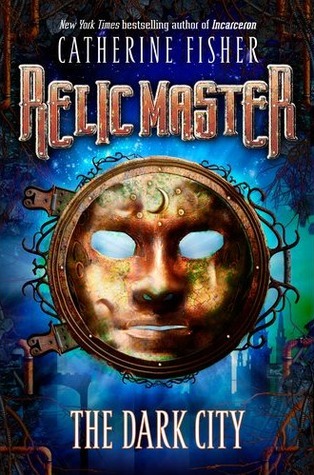
Relic Master: The Dark City- First in a hot summer series
The story is set in the world of Anaria- a world crumbling, and plagued by devastation. All that remains of technology are the mysterious, and illegal ancient relics, which emit great powers. The only hope for this world is Galen- a member of the old Order, and a Keeper of Relics, as well as his 16-year-old apprentice, Raffi. They embark on a perilous quest to retrieve a secret and powerful relic that has been hidden for centuries, but they are not alone. There are others who seek this relic, and they will stop at nothing to get it.
First of all, I have to say I loved the design. I don't know what the original UK editions looked like, but these are amazing. The covers are visually stunning, and each book contains one piece of a map of Anaria on the reverse of the jacket. Each chapter begins with a quote either from the Watch who rule this world, or The Book of Moons, (which contains Anaria's history) and reveal a great deal about the world as it was and the world as it is. While Anaria is somewhat of a dystopia, I wouldn't go so far as to label this dystopian. Instead, I'd call it a quest fantasy, more along the lines of Lord of the Rings.
The pacing of the story is excellent, and it will immediately grab readers. The plot is not nearly as sophisticated as Incarceron, but the world building is solid, and the relationships between the characters are complex. At the start of the book, Galen is magically impotent. Injured in an accident that caused him to lose his powers, he relies on Raffi to keep others from finding out. Raffi has some ability, but is naive and trusting, and isn't really a leader. Then there is Carys, who is probably the most interesting and complicated character of all. A member of The Watch, her private journal entries reveal herself as a spy, but the more time she spends with Galen and Raffi, the less certain readers will be of her purpose.
Having read and loved Incarceron and Sapphique, I was hoping this would be equally as brilliant, which it isn't, but it's good, and worth the read.
Friday, May 20, 2011
Noah Barleywater Runs Away- A New Children's Classic has been born
I remember when Boy in the Striped Pajamas was released. It promised to be something different than most books we've read before. It was a beautiful allegory, and I instantly fell in love with the book. When I saw that John Boyne had a new book out, I couldn't wait to read it, and he does not disappoint!
Noah Barleywater is an eight-year-old boy whom we meet preparing to run away from home in search of an adventure. This of course is only one of his motivations. There is something troubling him at home that he doesn't want to face, and he has decided that the best thing to do is to run away. On his journey he meets a talking Daschund and a rather hungry donkey, who guide him to an odd looking cottage that is also a toy shop. This toy shop isn't just a toy shop. It's a magical place full of wooden toys and puppets, and the whole store is alive. The toymaker, (whom readers will later recognize as a beloved fairy tale character) shares the stories of his wonderous adventures, changing Noah's life forever.
Subtitled a "fairy tale", that's exactly what this book is, and it begs to be read aloud. The language is whimsical and clever, and the best way to describe this story is magical. From the very beginning I was hooked, and I just can't express how special it really is. There are important lessons to be learned here. Lessons about being honest with children, keeping promises, and facing the things we're most afraid of.
Once in a while, and ever so rarely a book comes along that truly has the makings of a classic, and this is one of those gems. Like Alice in Wonderland and the Wizard of Oz, this is an unforgettable story that will charm children for generations.
Noah Barleywater is an eight-year-old boy whom we meet preparing to run away from home in search of an adventure. This of course is only one of his motivations. There is something troubling him at home that he doesn't want to face, and he has decided that the best thing to do is to run away. On his journey he meets a talking Daschund and a rather hungry donkey, who guide him to an odd looking cottage that is also a toy shop. This toy shop isn't just a toy shop. It's a magical place full of wooden toys and puppets, and the whole store is alive. The toymaker, (whom readers will later recognize as a beloved fairy tale character) shares the stories of his wonderous adventures, changing Noah's life forever.
Subtitled a "fairy tale", that's exactly what this book is, and it begs to be read aloud. The language is whimsical and clever, and the best way to describe this story is magical. From the very beginning I was hooked, and I just can't express how special it really is. There are important lessons to be learned here. Lessons about being honest with children, keeping promises, and facing the things we're most afraid of.
Once in a while, and ever so rarely a book comes along that truly has the makings of a classic, and this is one of those gems. Like Alice in Wonderland and the Wizard of Oz, this is an unforgettable story that will charm children for generations.
Wednesday, May 18, 2011
The Reading Promise- A Must Read Memoir for Book Lovers!
When Alice Ozma was 9 years old, her father made a promise to read to her every night without fail for one hundred nights. One hundred nights passed, and not wanting it to end, they agreed to make it 1000, and then to keep it going for as long as they possibly could. The reading "streak" as they called it lasted 3,218 nights, ending on her first day of college. Alice was so profoundly changed by this experience, that she made a commitment to spread the word about reading, and the importance of a reading promise.
Sometimes when I'm surfing the web and looking at blogs, I come across a review or an article that piques my interest. A few days ago, I stumbled upon an article featuring this wonderful book, and it's the kind of story that will especially resonate with anybody who loves books, and with anybody who ever enjoyed being read to. I was reading on my own at a very early age, but I still looked forward to the nights when my father would sit down on my bed with me and read me a bedtime story. I don't really remember how old I was when this ritual stopped, but after reading this book, I was suddenly nostalgic for those times.

Sometimes when I'm surfing the web and looking at blogs, I come across a review or an article that piques my interest. A few days ago, I stumbled upon an article featuring this wonderful book, and it's the kind of story that will especially resonate with anybody who loves books, and with anybody who ever enjoyed being read to. I was reading on my own at a very early age, but I still looked forward to the nights when my father would sit down on my bed with me and read me a bedtime story. I don't really remember how old I was when this ritual stopped, but after reading this book, I was suddenly nostalgic for those times.
This memoir is such a beautiful and uplifting tribute to the joy and value of books and reading in a time when the news is so riddled with stories of cuts to school library budgets. It is also the story of a wonderful bonding experience between a father and a daughter, and how reading together made them closer.
Alice is a terrific storyteller, and her warmth and passion for her subject is infectious. She talks about her father with tremendous affection, and it's clear that in her eyes, there could be no bigger hero. Being an elementary school librarian was not a job- it was a calling, and he sees nothing more valuable than sharing books with children.
In this series of humorous and touching vignettes, Alice celebrates both the extraordinary man who instilled in her a lifelong love of books, and the books that have contributed to making her who she is. Whether you write for children, work in a library or have ever had a special relationship with a parent this is the kind of book that will remind you of everything that you love about books, and make you want to grab your children and read to them right away. (Grown up or not!)
If you would like to know more about starting a reading streak and making a reading promise, visit the author's website- http://www.makeareadingpromise.com/.
Alice is a terrific storyteller, and her warmth and passion for her subject is infectious. She talks about her father with tremendous affection, and it's clear that in her eyes, there could be no bigger hero. Being an elementary school librarian was not a job- it was a calling, and he sees nothing more valuable than sharing books with children.
In this series of humorous and touching vignettes, Alice celebrates both the extraordinary man who instilled in her a lifelong love of books, and the books that have contributed to making her who she is. Whether you write for children, work in a library or have ever had a special relationship with a parent this is the kind of book that will remind you of everything that you love about books, and make you want to grab your children and read to them right away. (Grown up or not!)
If you would like to know more about starting a reading streak and making a reading promise, visit the author's website- http://www.makeareadingpromise.com/.
Sunday, May 15, 2011
When Everything old is new again- the return of Macdonald Hall
I remember the first time I was introduced to Gordon Korman. I was 11 years old, and attending German Mills Public School, and Gordon Korman came to my school. Imagine my surprise and delight when I discovered that he was a student at my school, and close to my age when he wrote This Can't Be Happening At Macdonald Hall for an english assignment. From that moment on, I became a huge fan of his books, and especially of Bruno and Boots.
Bruno and Boots are best friends and roommates at a boarding school outside of Toronto called Macdonald Hall. They are mischevious pranksters, who enjoy playing jokes on the school, the teachers and their friends. Their partners in crime are Diane and Cathy, two young ladies who attend Miss Scrimmage's Finishing School for Girls, located across the road. The boys are watched by their strict headmaster Mr. Sturgeon (aka "The Fish") and the books follow their adventures (capers) at school and with their friends.
This new edition of Gordon Korman's now famous book arrives 33 years after its original publication, and it has stayed in print in one form or another consistently over this time. Best of all, these loveable trouble-makers never get old. We admire their antics, root for them to pull it off, and cheer when they do. Throw in some of today's technology and just imagine what kind of trouble they'll be able to find!
Bruno and Boots are best friends and roommates at a boarding school outside of Toronto called Macdonald Hall. They are mischevious pranksters, who enjoy playing jokes on the school, the teachers and their friends. Their partners in crime are Diane and Cathy, two young ladies who attend Miss Scrimmage's Finishing School for Girls, located across the road. The boys are watched by their strict headmaster Mr. Sturgeon (aka "The Fish") and the books follow their adventures (capers) at school and with their friends.
This new edition of Gordon Korman's now famous book arrives 33 years after its original publication, and it has stayed in print in one form or another consistently over this time. Best of all, these loveable trouble-makers never get old. We admire their antics, root for them to pull it off, and cheer when they do. Throw in some of today's technology and just imagine what kind of trouble they'll be able to find!
Friday, May 13, 2011
Children's Choice Book Awards- When kids have the final say.
Today was the final day of the official closing ceremonies for the Ontario Forest of Reading Program at Harbourfront, and as always, it was a day full-of excitement, and surprises. When the nominees are first announced in each category, we supposed "experts" make our predictions as to which books will win, and most of the time, we're completely wrong!
This year, I was off on most counts, and I'm delighted! Children's choice awards are the truest reflection of a book's success with its intended audience. In my years of bookselling, I've learned that adults very seldom read a children's books with an eye purely towards enjoyment. They are looking for a teachable moment, a moral lesson, literary quality, etc...
Children on the other hand are primarily interested in one thing- did they enjoy it. A highly recognizable name or a visually appealing cover, or the genre might draw the kids to pick it up, but in the end, the kids know what excites them, and the votes reflect their choices, not ours.
So congratulations to all of the Forest winners, and to all of the winners and nominees, thank you for writing books that get kids excited about books.
For a full list of winners, visit the OLA website at http://www.accessola.com/
This year, I was off on most counts, and I'm delighted! Children's choice awards are the truest reflection of a book's success with its intended audience. In my years of bookselling, I've learned that adults very seldom read a children's books with an eye purely towards enjoyment. They are looking for a teachable moment, a moral lesson, literary quality, etc...
Children on the other hand are primarily interested in one thing- did they enjoy it. A highly recognizable name or a visually appealing cover, or the genre might draw the kids to pick it up, but in the end, the kids know what excites them, and the votes reflect their choices, not ours.
So congratulations to all of the Forest winners, and to all of the winners and nominees, thank you for writing books that get kids excited about books.
For a full list of winners, visit the OLA website at http://www.accessola.com/
Meeting Meg Cabot
Yesterday I had the pleasure of meeting bestselling teen author Meg Cabot at a lunch hosted by Scholastic Canada, celebrating her new book Abandon. Firstly, I have to say, she is wonderful. She is outgoing, bubbly, funny and really charming. She really took the time to speak to each of us individually, which I appreciated, but her talk was a lot of fun too. A true writer, she asked me if I write, and encouraged me to pursue getting it published. She told me that she looks at writing like planning a trip- you should know your destination, but you don't necessarily have to plan every stop along the way. Very sage advice- now if only I can figure out what my destination is, maybe I'll eventually get something finished.
Now on to her book! I had already finished the book by the time I arrived at lunch, but hearing her speak about it was really enriching. I love having these little personalized tidbits about the author to reference when I booktalk. It's just something extra that really connects people to the author, and increases interest in the book.
The story of Abandon loosely ties in with the myth of Hades and Persephone, but is re-imagined for a teenage audience. When the story begins, Pierce and her mother have moved back to her mother's home town on an island in Florida, hoping to make a fresh start. Pierce has recently come back to life after an accident, escaping from the underworld by throwing a cup of tea in her "captor's" face. With her, she brought back a rare and beautiful necklace, that seems to cause harm to anyone who comes in contact with it. She also has one other little problem. John Hayden, the dark, brooding young ruler of the underworld wants her back, and will go to great lengths to get her.
I really enjoyed this. I love Greek Mythology, and I love stories that are centred around a myth. If you know anything about the author, you'll recognize a lot of her in Pierce. Pierce is a bit of an outsider. She doesn't really know where she belongs, she's been labeled by her school, and since nobody believes her anyway about what she experienced while she was dead, she carries that around with her too. Not a lot of things have gone right for her since she came back, and she's a pretty sympathetic character. She's smart, but not academically gifted, and she's extremely caring.
Hayden's character isn't quite as well developed, but he does pair up nicely with Pierce. He's brooding, but who wouldn't be if you were an 18-year-old underlord? He's got some heavy burdens himself, and Pierce attracts him and infuriates him. The characters do have chemistry, and the author really does a good job of creating romantic tension and teasing readers.
Interestingly, when she talked about the title, it came from a completely different place than where I thought. If you read it, I'd be interested to see what your take is on how the title relates to the book. And good news for fans- This is the first book in a planned trilogy, so there is definitely more to be said about these characters.
Now on to her book! I had already finished the book by the time I arrived at lunch, but hearing her speak about it was really enriching. I love having these little personalized tidbits about the author to reference when I booktalk. It's just something extra that really connects people to the author, and increases interest in the book.
The story of Abandon loosely ties in with the myth of Hades and Persephone, but is re-imagined for a teenage audience. When the story begins, Pierce and her mother have moved back to her mother's home town on an island in Florida, hoping to make a fresh start. Pierce has recently come back to life after an accident, escaping from the underworld by throwing a cup of tea in her "captor's" face. With her, she brought back a rare and beautiful necklace, that seems to cause harm to anyone who comes in contact with it. She also has one other little problem. John Hayden, the dark, brooding young ruler of the underworld wants her back, and will go to great lengths to get her.
I really enjoyed this. I love Greek Mythology, and I love stories that are centred around a myth. If you know anything about the author, you'll recognize a lot of her in Pierce. Pierce is a bit of an outsider. She doesn't really know where she belongs, she's been labeled by her school, and since nobody believes her anyway about what she experienced while she was dead, she carries that around with her too. Not a lot of things have gone right for her since she came back, and she's a pretty sympathetic character. She's smart, but not academically gifted, and she's extremely caring.
Hayden's character isn't quite as well developed, but he does pair up nicely with Pierce. He's brooding, but who wouldn't be if you were an 18-year-old underlord? He's got some heavy burdens himself, and Pierce attracts him and infuriates him. The characters do have chemistry, and the author really does a good job of creating romantic tension and teasing readers.
Interestingly, when she talked about the title, it came from a completely different place than where I thought. If you read it, I'd be interested to see what your take is on how the title relates to the book. And good news for fans- This is the first book in a planned trilogy, so there is definitely more to be said about these characters.
Monday, May 9, 2011
Divergent: Not Just Another Dystopia
Ever since The Hunger Games Trilogy popularized the dystopian genre, there have been a slew of YA dystopians published, each promising to be the next big thing. The trouble is, it's like crying wolf. You hear it often enough about enough books, and eventually it ceases to mean anything. When I was urged to read Divergent, I was skeptical. There is no shortage of dystopian thrillers out there, and despite the "buzz" surrounding this one, I was expecting it to be just another one of those dystopian books. I was wrong. Veronica Roth has managed to take a heavily satruated genre, and still create an original, edge-of-your-seat thriller that will immediately hook readers.
The story is set in a future Chicago, which is one of the few cities remaining after another world war. After the war, the survivors divided into five factions, each associated with a particular virtue- Candor, Amity, Dauntless, Erudite and Abnegation. The mandate of each of the factions is well-explained, but the meaning of these words speak volumes about what the factions believe.
In this world, all 16-year-olds choose their factions, their choices aided by an aptitude test, which suggests which faction they are best suited to. Beatrix is a member of Abnegation, but as her selection day approaches, she is uncertain where she belongs. Tensions are brewing between the factions, and Beatrix knows that no matter what choice she makes, the cost will be high.
The aspect of dystopian fiction that I enjoy most is the ability of these books to make you think, and days after I finished it, I'm still thinking about it. Which faction would my aptitude test suggest, and more importantly, which one would I choose? Once you choose, there is no going back, and if you choose wrong, you could end up factionless and live a life of poverty and misery. I like to think that I would be certain of my choice, and that I would know where I belong, but that's part of what makes this story interesting. How many of us are ever 100% certain of our choices? Teens are asked to make an overwhelming number of choices. But what if the choice is wrong? What if your choice doesn't choose you? What if you regret your choice later on? This is what Beatrix struggles with throughout the novel, and what makes her sympathetic and relatable.
This is an extremely well-plotted, well-written story with all of the components that make these books so attractive- romance, action, conflict, angst, and impossible choices. If you've read Lauren Oliver's Delerium or AllyCondie's Matched, (or even if you haven't) you'll find lots to like about this book.
Highly recommended for 14 and up.
The story is set in a future Chicago, which is one of the few cities remaining after another world war. After the war, the survivors divided into five factions, each associated with a particular virtue- Candor, Amity, Dauntless, Erudite and Abnegation. The mandate of each of the factions is well-explained, but the meaning of these words speak volumes about what the factions believe.
In this world, all 16-year-olds choose their factions, their choices aided by an aptitude test, which suggests which faction they are best suited to. Beatrix is a member of Abnegation, but as her selection day approaches, she is uncertain where she belongs. Tensions are brewing between the factions, and Beatrix knows that no matter what choice she makes, the cost will be high.
The aspect of dystopian fiction that I enjoy most is the ability of these books to make you think, and days after I finished it, I'm still thinking about it. Which faction would my aptitude test suggest, and more importantly, which one would I choose? Once you choose, there is no going back, and if you choose wrong, you could end up factionless and live a life of poverty and misery. I like to think that I would be certain of my choice, and that I would know where I belong, but that's part of what makes this story interesting. How many of us are ever 100% certain of our choices? Teens are asked to make an overwhelming number of choices. But what if the choice is wrong? What if your choice doesn't choose you? What if you regret your choice later on? This is what Beatrix struggles with throughout the novel, and what makes her sympathetic and relatable.
This is an extremely well-plotted, well-written story with all of the components that make these books so attractive- romance, action, conflict, angst, and impossible choices. If you've read Lauren Oliver's Delerium or AllyCondie's Matched, (or even if you haven't) you'll find lots to like about this book.
Highly recommended for 14 and up.
Thursday, May 5, 2011
Review: She Said/She Saw by Norah McClintock
17-year-olds Kelly and Tegen are sisters, born 10 months apart, but as different as night and day. Kelly looks at life like a movie, while Tegen sees hers as an epic romance novel. Kelly is the more serious girl, while Tegen likes to party with her friends. What they do have in common is a general dislike for one another.
One night, while in the backseat of her best bud (but potential boyfriend) Martin's car, Martin and their friend Clark are shot dead in front of her. What did Tegen see that night? Is it possible that she's telling the truth and she honestly didn't see what happened, or is there more to the story that she's not telling. What Tegen said vs what she saw makes up the title of this book, and it's the basis for the mystery.
Norah McClintock is the reigning mystery queen with Canadian kids, and she tells a good story. Kelly and Tegen alternate points of view, with Kelly's view being presented in flim script form, and Tegen's in first person point of view. Kelly's observations are recorded by speaking directly to the camera which fill the reader in on details which Tegen witholds. As Kelly points out, there is always an added element to any story, and that's what's in the head of the teller. Tegen is the perfect example of an unreliable narrator. There are things she doesn't know, and things she chooses not to tell. This makes Kelly's sections all the more important, because what she knows is instrumental in solving the mystery of what happened that night.
I also liked the depiction of Tegen's gradual isolation and shunning by her peers. Everybody seemed to believe that she was deliberately not telling what she saw, and it's an accurate depiction of how quickly high school kids can turn on one another. I felt her lonlieness and confusion, and while I wasn't 100% sure that she was telling the truth initially, I was swayed into believing her and feeling sorry for her.
The part I didn't like was the way the mystery was resolved at the end. In hindsight, there was a clue early in the novel that hinted at who might be responsible for the crime, but the detective work was shoddy, and I didn't quite buy they way everything wrapped up. I like a good twist in a mystery, but I didn't feel like this really worked. Everything happened very quickly, and it was too polar opposite from where the story seemed to be going.
Overall, it was a suspenseful and fast-paced read, and I was anxious to finish it. There is some marijuana use and swearing, so it's probably better suited for a high school reader than middle-school.
One night, while in the backseat of her best bud (but potential boyfriend) Martin's car, Martin and their friend Clark are shot dead in front of her. What did Tegen see that night? Is it possible that she's telling the truth and she honestly didn't see what happened, or is there more to the story that she's not telling. What Tegen said vs what she saw makes up the title of this book, and it's the basis for the mystery.
Norah McClintock is the reigning mystery queen with Canadian kids, and she tells a good story. Kelly and Tegen alternate points of view, with Kelly's view being presented in flim script form, and Tegen's in first person point of view. Kelly's observations are recorded by speaking directly to the camera which fill the reader in on details which Tegen witholds. As Kelly points out, there is always an added element to any story, and that's what's in the head of the teller. Tegen is the perfect example of an unreliable narrator. There are things she doesn't know, and things she chooses not to tell. This makes Kelly's sections all the more important, because what she knows is instrumental in solving the mystery of what happened that night.
I also liked the depiction of Tegen's gradual isolation and shunning by her peers. Everybody seemed to believe that she was deliberately not telling what she saw, and it's an accurate depiction of how quickly high school kids can turn on one another. I felt her lonlieness and confusion, and while I wasn't 100% sure that she was telling the truth initially, I was swayed into believing her and feeling sorry for her.
The part I didn't like was the way the mystery was resolved at the end. In hindsight, there was a clue early in the novel that hinted at who might be responsible for the crime, but the detective work was shoddy, and I didn't quite buy they way everything wrapped up. I like a good twist in a mystery, but I didn't feel like this really worked. Everything happened very quickly, and it was too polar opposite from where the story seemed to be going.
Overall, it was a suspenseful and fast-paced read, and I was anxious to finish it. There is some marijuana use and swearing, so it's probably better suited for a high school reader than middle-school.
Monday, May 2, 2011
Reading Quotas
There is an interesting editorial in the May/June issue of Horn Book (http://www.hbook.com/magazine/editorials/may11.asp) discussing the dangers of setting reading quotas with children. Whether it be a contest, or for school, Roger Sutton points out that setting a quota for anything often backfires, because suddenly, the point of the exercise is lost, and the mission becomes reaching that goal by any means possible. In the case of reading quotas (such as the 50 book a year requirement recently set by UK Secretary of Education Michael Gove) kids might zip through 50 books a week, but the question becomes what are they actually reading? Does a book designed for infants actually count?
Sutton's comments took me back to my 3rd grade read-a-thon, which I remember being pivitol in turning me into not just a good reader, but a veracious one. What I remember most clearly is wanting to win by reading the most books. (I don't remember if I did or not) The purpose of a read-a-thon is obviously to encourage reading, but now I wonder how much the exercise accomplished in the long run. Kids who already enjoyed reading kept on reading, but what about those who weren't already readers? Once the contest was over, did the non-readers become readers? I honestly don't think so.
Sutton also points out that one of the greatest faults of educators/parents/librarians is that many pay lip service to the importance and the pleasure of reading, but don't provide reading examples. He states that while it's nice to say that reading is fun, we have to do more than just say it. We have to let kids see us doing it. Some of the most effective silent reading programs in schools are ones where the teacher/librarian uses that time to actually read instead of doing other work. Studies also show that boys who see their fathers reading are more likely to be readers than those who don't.
While I agree that these are all valid points, I think there is another important element to getting kids reading, and that's choice. Take the Ontario Forest of Reading program for example. In order to be eligible to vote for a winner, children must read a minimum of 5/10 books on the list. Which 5 is up to them, and the level of enthusiasm they have for the winners is contagious. Why? Because in a program like this their preferences matter, and that's far more valuable than turning reading into a quota that has to be reached.
So here is my question to all of you: Do you think that setting quotas is an effective means of encouraging a love of reading, or should we be placing value on more than just a number?
Sutton's comments took me back to my 3rd grade read-a-thon, which I remember being pivitol in turning me into not just a good reader, but a veracious one. What I remember most clearly is wanting to win by reading the most books. (I don't remember if I did or not) The purpose of a read-a-thon is obviously to encourage reading, but now I wonder how much the exercise accomplished in the long run. Kids who already enjoyed reading kept on reading, but what about those who weren't already readers? Once the contest was over, did the non-readers become readers? I honestly don't think so.
Sutton also points out that one of the greatest faults of educators/parents/librarians is that many pay lip service to the importance and the pleasure of reading, but don't provide reading examples. He states that while it's nice to say that reading is fun, we have to do more than just say it. We have to let kids see us doing it. Some of the most effective silent reading programs in schools are ones where the teacher/librarian uses that time to actually read instead of doing other work. Studies also show that boys who see their fathers reading are more likely to be readers than those who don't.
While I agree that these are all valid points, I think there is another important element to getting kids reading, and that's choice. Take the Ontario Forest of Reading program for example. In order to be eligible to vote for a winner, children must read a minimum of 5/10 books on the list. Which 5 is up to them, and the level of enthusiasm they have for the winners is contagious. Why? Because in a program like this their preferences matter, and that's far more valuable than turning reading into a quota that has to be reached.
So here is my question to all of you: Do you think that setting quotas is an effective means of encouraging a love of reading, or should we be placing value on more than just a number?
Saturday, April 30, 2011
Review: The Gathering by Kelly Armstrong
When Kelly Armstrong burst onto the YA scene in 2008 with the first book of her Darkest Powers trilogy, I was completely blown away by how good it actually was. I was expecting a generic paranormal teen, but it moved quickly, was well-thought out, and ended on a cliff-hanger that had me impatient for the next. Unfortunately, her new trilogy didn't do the same for me.
The story takes place in a small medical research town called Salmon Creek on Vancouver Island. In fact, it's so small, you won't find it anywhere on a map, and the residents number 200. Sixty Eight kids from K-12 attend the local school, including Maya, the novel's protagonist. Ever since Maya's best friend Serena , captain of the swim team, mysteriously drowns in a calm lake, strange things have been happening in the town. Mountain lions are being spotted closer and closer to the town, and her best friend Daniel has been experiencing powerful premonitions about people and situations. To make matters more complicated, Maya finds herself strangely attracted to Rafe, the new bad boy around town, who is harbouring secrets of his own.
Don't get me wrong- it isn't a bad book by any means, and there is a lot to like about it. Maya is strong, smart, and independent. She also seems to have an ability to heal animals, though she doesn't fully understand how. There are lots of supernatural elements to keep readers engaged, and I liked the ties to Native mythology. I enjoyed Maya's relationship with her adoptive parents and her friends, and the fact that she had a guy pal, who was just a pal and not a romantic interest. It would have been very easy for the author to try and push them together, but that wasn't the case. He's protective of her in a plutonic sort of way, and Maya genuinely wants him to get past Serena's death and find a new girlfriend.
There are also a few weaknesses in the novel, the biggest one being the relationship that develops between Maya and Rafe. Rafe is a reputed bad boy, and outsider, and he has a reputation for being a player. For the first half of the book Maya doesn't want anything to do with him, and when they do get together, it feels contrived. The author needs them together to move the story forward, but I just couldn't buy that she would accept him so quickly.
I also felt like the pacing was off, and maybe that's a personal preference. In her previous books, the plot unfolded very quickly, and here it takes a lot more time before anything happens. I figured out reasonably quickly where the story was going, and I kept wondering when she was going to get there. By the time she did, I was mildly annoyed, feeling like she'd tried to introduce too many plot points at the end of the book. Still, fans of paranormal romance will likely enjoy the book and stick with the trilogy. There are a couple of mature situations (Someone spikes Maya's drink and she makes out a bit with Rafe) but nothing overly graphic that would make this inappropriate for 7th and 8th graders.
Thursday, April 28, 2011
Skulduggery Pleasant- A Series Not to Be Missed!
Series fiction often gets a bad rap. To be fair, you only need look in your local bookstore to see the seemingly endless shelves filled with serial fiction that earns points for popularity, but are thought of as junk food. Don't get me wrong- I'm not bashing these types of series. There is nothing wrong with something that will be popular with kids and is just fun and easy to read. I loved Sweet Valley High in middle school, and it certainly didn't hurt me to read them!
At the other end of the spectrum are series that are not a trilogy, and are both high quality and popular. I start a lot of series. I enjoy many of them, and never get to the second book. Even if I did nothing but read for a year, I'd never have time to get through all of the books I want to read. But a few series, and they are few, get me completely hooked, and I greedily and eagerly devour each successive book. The subject of this post, Skulduggery Pleasant, is one of those series, and is at the very top of my must-read series list in big bold letters!
The series, which is currently 5 books long (Note to author: Please hurry up and finish book 6!) is written by Irish author Derek Landy, and it is brilliant. I don't use that word lightly either, so that should tell you something right away! The series stars Skulduggery Pleasant, an undead, sorcerer and skeleton detective,(Who wears immaculately tailored clothing and drives a Bentley.) and his partner Stephanie Edgley (aka Valkyrie Cain), who is 12 in the first book, and ages in the successive books. By book 5, she's 16. They are supported by numerous allies, comprised of various magical sorcerers and mages, (don't call them wizards- they don't like it) who help them battle against evil forces.
What really makes these books work is how amazingly witty they are. The plots are fast-moving and action-packed, but the writing is clever and funny, drawing comparisons to The Thin Man, for the rapid fire exchanges between the characters. It is difficult to do dialogue well, and Landy does it exceptionally well, appealing to adult readers as well as kids. It's also extremely refreshing to find another fantasy series with a kick-butt heroine. She's smart, strong and quick-witted, and never runs from danger.
I could gush on even more about these books, but you'll just have to trust me and read them for yourselves.
At the other end of the spectrum are series that are not a trilogy, and are both high quality and popular. I start a lot of series. I enjoy many of them, and never get to the second book. Even if I did nothing but read for a year, I'd never have time to get through all of the books I want to read. But a few series, and they are few, get me completely hooked, and I greedily and eagerly devour each successive book. The subject of this post, Skulduggery Pleasant, is one of those series, and is at the very top of my must-read series list in big bold letters!
The series, which is currently 5 books long (Note to author: Please hurry up and finish book 6!) is written by Irish author Derek Landy, and it is brilliant. I don't use that word lightly either, so that should tell you something right away! The series stars Skulduggery Pleasant, an undead, sorcerer and skeleton detective,(Who wears immaculately tailored clothing and drives a Bentley.) and his partner Stephanie Edgley (aka Valkyrie Cain), who is 12 in the first book, and ages in the successive books. By book 5, she's 16. They are supported by numerous allies, comprised of various magical sorcerers and mages, (don't call them wizards- they don't like it) who help them battle against evil forces.
What really makes these books work is how amazingly witty they are. The plots are fast-moving and action-packed, but the writing is clever and funny, drawing comparisons to The Thin Man, for the rapid fire exchanges between the characters. It is difficult to do dialogue well, and Landy does it exceptionally well, appealing to adult readers as well as kids. It's also extremely refreshing to find another fantasy series with a kick-butt heroine. She's smart, strong and quick-witted, and never runs from danger.
I could gush on even more about these books, but you'll just have to trust me and read them for yourselves.
Sunday, April 24, 2011
Keystone Books- A New High Interest/Low Vocabulary Series
Over the last 10 years or so, High Interest/Low Vocabulary books have grown in demand as a tool for attracting struggling and/or reluctant teen readers.
This past February, Dundurn Press, a well-respected Canadian publisher with an already solid YA line launched their new high interest series branded as Keystone Books. The first two books released in Februrary, and the third will be available early in the fall of 2011.
The two books, while drastically different from one another are both excellent in quality, and worth reading.
The first book is a new entry from Red-Maple Award nominee Marina Cohen. Like her previous book, Mind Gap is a terrific thriller with high boy appeal, and a fast-moving plot that will keep kids turning the pages.
This past February, Dundurn Press, a well-respected Canadian publisher with an already solid YA line launched their new high interest series branded as Keystone Books. The first two books released in Februrary, and the third will be available early in the fall of 2011.
The two books, while drastically different from one another are both excellent in quality, and worth reading.
The first book is a new entry from Red-Maple Award nominee Marina Cohen. Like her previous book, Mind Gap is a terrific thriller with high boy appeal, and a fast-moving plot that will keep kids turning the pages.Protaganist Jake is a fourteen-year-old boy on the verge of going wrong. He's been gambling in school, drinking and partying, and he's becoming involved in gang activity. One night, he receives a text message from a friend inviting him to a flash party on a subway train at St. George Station. He knows that he'd be letting his mother down by going, but sneaks out anyway.
A train pulls into the station that already has a party going on, but it is far from the party he expected. The train is a ghost train, filled with ghostly and somewhat terrifying passengers, and unless he does something to change his path, it looks like this is one train he'll never get off.
I enjoyed Ghost Ride, but this is an even better book. The story is like A Christmas Carol meets The Sixth Sense movie, and there is a definite twist. The train lets Jake off in his past, present and future, and he discovers just how much they are intertwined. He also discovers that he isn't the only one affected by his actions, and that the conceqeunces are felt by people he cares about.
The second novel is Accomplice by Valerie Sherrard, and is much more of a contemporary, edgy story for teens. Accomplice is narrated by Lexie, a seventeen-year-old Vancouver teen with a secret. Her boyfriend is a heroin addict, and it's her fault. She pushed him to try it at a party. They both did in fact. But she got sick, and he got addicted.
The story is dark, and edgy and suspenseful, and the author does an excellent job of illustrating the impact of drug use on teens without being preachy or predictable. Lexie acts as an enabler because she feels responsible. She also still cares about Devlin, and despite the fact that she's with a new guy now, she can't let go. I really enjoyed how much of what's going on inside Lexie's head is fleshed out for the reader, and there are definitely a lot of surprising, lip-biting moments as you wonder how she'll break free of the sprial she's in. There is some mild swearing, and I know that some of our middle-school customers have shied away from this one, but it's a great read.
At the time of this writing, the publisher has not been able to supply an exact reading level on these titles, but I'd say they're comperable to the Orca Soundings- around a grade 4 level with interest level 12 and up.
In the children's book world in particular, it often takes a while for a new series to get noticed and to pick up steam, but if you have kids who enjoy the Orcas and are wondering what to give them next, or just for a quick, stand-alone read that isn't part of a trilogy, I highly recommend giving these two books a try.
Friday, April 22, 2011
Fall Book Preview: This Dark Endeavor: The Apprenticeship of Victor Frankenstein
I was fortunate enough to get an advance copy of Kenneth Oppel's new book (releasing from Harper Collins Canada in August and Simon and Schuster in the States) and while I've always enjoyed reading his books, this is his best book yet.
Identical twin brothers Victor and Conrad Frankenstein have grown up together, along with a distant cousin and mutal love interest Elizabeth. One day, they discover a secret passage that leads to an underground room known as the "Dark Library" The library contains a selection of books on alchemy and ancient remedies, intriguing Victor.
When Conrad becomes gravely ill, Victor is drawn back to the forbidden library where he discovers an Elixer of life that he hopes will save his brother. But the quest for the three ingredients is a dangerous one, and if he fails or succeeds, nobody's lives will be the same.
This book will hook tween/teen readers from the first page, and Oppel masterfully foreshadows what's to come in the first scene. The characters are complex and multi-layered, and there are shades of good and evil in all of them. Set around the time of the French Revolution, it is a time when the lines between magic and science were blurry and medicine was archaic. And it's fascinating. There are many nods to the Mary Shelly novel (including the family name of Frankenstein), but comparisons could also be drawn to Dr. Jeckyl and Mr. Hyde. It is a story of love, jealousy, courage and an exploration of how easily good intentions can become evil.
The ending suggests a second book in the future, but in the meantime, grab your copy as soon as it comes out, and drink some Red Bull because you won't be able to put this down.
Identical twin brothers Victor and Conrad Frankenstein have grown up together, along with a distant cousin and mutal love interest Elizabeth. One day, they discover a secret passage that leads to an underground room known as the "Dark Library" The library contains a selection of books on alchemy and ancient remedies, intriguing Victor.
When Conrad becomes gravely ill, Victor is drawn back to the forbidden library where he discovers an Elixer of life that he hopes will save his brother. But the quest for the three ingredients is a dangerous one, and if he fails or succeeds, nobody's lives will be the same.
This book will hook tween/teen readers from the first page, and Oppel masterfully foreshadows what's to come in the first scene. The characters are complex and multi-layered, and there are shades of good and evil in all of them. Set around the time of the French Revolution, it is a time when the lines between magic and science were blurry and medicine was archaic. And it's fascinating. There are many nods to the Mary Shelly novel (including the family name of Frankenstein), but comparisons could also be drawn to Dr. Jeckyl and Mr. Hyde. It is a story of love, jealousy, courage and an exploration of how easily good intentions can become evil.
The ending suggests a second book in the future, but in the meantime, grab your copy as soon as it comes out, and drink some Red Bull because you won't be able to put this down.
Wednesday, April 20, 2011
The Art of Racing in the Rain
It's been a few days since my last post, but life gets busy, and I find myself with unfinished posts in the editor and a lapse. Today I have to gush about a book that I finished reading a few weeks ago, but want to share. I first came across Garth Stein's wonderful book in a children's catalogue. The adult version was such a success that they are releasing a young reader's adaptation this spring. I read the "children's version" in a day, and promptly arranged for a copy of the adult version to compare. The children's version has been abridged, and edited slightly to remove some of the more adult content, but otherwise they are virtually the same.
Now the story: On the eve of his death, Enzo the dog reflects on his life, and recalls everything that his family has been through. Denny, his person, is an aspiring race car driver, and through Denny, Enzo has gained tremendous insight into the complexities of being human. He realizes, that like racing, life is not always about going fast, and that by using the techniques needed on the race track, one can successfully navigate life's ordeals.
I LOVED this book, and I can't say enough about it. Whenever I describe it to someone, the first comment is usually "Oh no- is it sad? I don't want to read a sad book". The answer is yes and no. You'll bawl your eyes out, and then you'll smile at the end. (Really!) Using the dog's voice to narrate this story is incredibly original, and it works really well. Enzo is funny, intelligent, and amazingly human.
It is an emotional roller coaster of a book with moments that will both touch you and break your heart, but it's worth every second of it. This is the kind of book that will grab hold of you and not let go, and it will leave you thinking about it long after you turn the last page.
Last night at Passover dinner, I gave the book to my extremely reluctant reader brother. (Who is just a few years younger than I am) He read the first few pages and put it down, insisting that it's too depressing and sad. I persisted, and he agreed to give it a chance. After dinner, he disappeared for a while, and when he came back, he was several chapters into it. Fast forward a couple of hours later, and he was more than halfway through. He stayed up late last night to finish it (which he's never done) and is passing it on to our mother to read next. I can't think of a better endorsement than what he told her when he finished it: "It is quite the book".
Now the story: On the eve of his death, Enzo the dog reflects on his life, and recalls everything that his family has been through. Denny, his person, is an aspiring race car driver, and through Denny, Enzo has gained tremendous insight into the complexities of being human. He realizes, that like racing, life is not always about going fast, and that by using the techniques needed on the race track, one can successfully navigate life's ordeals.
I LOVED this book, and I can't say enough about it. Whenever I describe it to someone, the first comment is usually "Oh no- is it sad? I don't want to read a sad book". The answer is yes and no. You'll bawl your eyes out, and then you'll smile at the end. (Really!) Using the dog's voice to narrate this story is incredibly original, and it works really well. Enzo is funny, intelligent, and amazingly human.
It is an emotional roller coaster of a book with moments that will both touch you and break your heart, but it's worth every second of it. This is the kind of book that will grab hold of you and not let go, and it will leave you thinking about it long after you turn the last page.
Last night at Passover dinner, I gave the book to my extremely reluctant reader brother. (Who is just a few years younger than I am) He read the first few pages and put it down, insisting that it's too depressing and sad. I persisted, and he agreed to give it a chance. After dinner, he disappeared for a while, and when he came back, he was several chapters into it. Fast forward a couple of hours later, and he was more than halfway through. He stayed up late last night to finish it (which he's never done) and is passing it on to our mother to read next. I can't think of a better endorsement than what he told her when he finished it: "It is quite the book".
Thursday, April 14, 2011
Banned Books and Unsuitable Reads
At some point in your reading experience as children/teens, somebody probably once tried to tell you that a book you wanted to read was unsuitable. If you were anything like me, it only made you want to read it all the more. Nothing piqued my interest like being told that I was too young or it was too hard, and by hook or by crook I would find a way to read that book.
In a recent article in the Guardian newspaper, YA author Patrick Ness suggested his top ten picks for books that are considered unsuitable for teens, but that they should read anyway. Here is the link to the full article: http://www.guardian.co.uk/childrens-books-site/2011/apr/08/patrick-ness-top-10-unsuitable-books-teenagers
Coincidentally, this article came out roughly at the same time as the ALA most frequently challenged books of (http://www.oif.ala.org/oif/?p=2008) 2010.
Though nobody (that I'm aware of) has published such a list in Canada, there have been quite a few titles from the Ontario Forest of Reading Lists that have been challenged and banned. Just last year, Anne Laurel Carter's book The Shepherd's Granddaughter came under fire after complaints from parents and Jewish groups alledging an anti Israel bias. To make matters worse, a trustee for Toronto Centre-Rosedale vowed to have the book removed from school shelves, but admitted to not having read it. (In the end the board voted not to remove the book) Disagreeing with an author's perspective is a personal perogative, but at least read the book first and be prepared with ammunition to defend your claim. (I have read it and didn't find evidence of bias)
I'm not a parent, but my view has always been we censor because something makes us uncomfortable, and not because it bothers the child. Books should make us think and feel, and discuss, and instead of telling children why they shouldn't read these books, there should be more people out there like Patrick Ness who tell them why they should.
In a recent article in the Guardian newspaper, YA author Patrick Ness suggested his top ten picks for books that are considered unsuitable for teens, but that they should read anyway. Here is the link to the full article: http://www.guardian.co.uk/childrens-books-site/2011/apr/08/patrick-ness-top-10-unsuitable-books-teenagers
Coincidentally, this article came out roughly at the same time as the ALA most frequently challenged books of (http://www.oif.ala.org/oif/?p=2008) 2010.
Though nobody (that I'm aware of) has published such a list in Canada, there have been quite a few titles from the Ontario Forest of Reading Lists that have been challenged and banned. Just last year, Anne Laurel Carter's book The Shepherd's Granddaughter came under fire after complaints from parents and Jewish groups alledging an anti Israel bias. To make matters worse, a trustee for Toronto Centre-Rosedale vowed to have the book removed from school shelves, but admitted to not having read it. (In the end the board voted not to remove the book) Disagreeing with an author's perspective is a personal perogative, but at least read the book first and be prepared with ammunition to defend your claim. (I have read it and didn't find evidence of bias)
I'm not a parent, but my view has always been we censor because something makes us uncomfortable, and not because it bothers the child. Books should make us think and feel, and discuss, and instead of telling children why they shouldn't read these books, there should be more people out there like Patrick Ness who tell them why they should.
Monday, April 11, 2011
Do kids really fear thick books?
It seems to me, that each season, books for young readers get thicker and thicker. Unfortunately, my customers are often reluctant to buy these 300+ page books for the library, insisting that thick books will scare the kids and they won't read them.
While that might be true for struggling readers, the global popularity of series such as Harry Potter (Book 7 is over 600 pages), Inkheart (560 pages) and Septimus Heap (Book 1 is 576 Pages) prove that thick doesn't matter if the book is engaging enough to hold their attention.
If that's the case, then what is the real reason behind this resistance to thick books? Despite overall positive results from the EQAO reading tests in Ontario, are the reading levels of GTA students that much lower than elsewhere in the province, or even the country? Is it a lack of time? Are kids so busy with after-school and leisure activities that we are assuming that they don't have time to read these thick books? Or, could it be that they avoid these books because they lack the time to read them, and are unfamiliar with the content?
And here's an even more interesting question- as reading e-books becomes more popular with kids, will page counts still be important without a physical book to judge?
While that might be true for struggling readers, the global popularity of series such as Harry Potter (Book 7 is over 600 pages), Inkheart (560 pages) and Septimus Heap (Book 1 is 576 Pages) prove that thick doesn't matter if the book is engaging enough to hold their attention.
If that's the case, then what is the real reason behind this resistance to thick books? Despite overall positive results from the EQAO reading tests in Ontario, are the reading levels of GTA students that much lower than elsewhere in the province, or even the country? Is it a lack of time? Are kids so busy with after-school and leisure activities that we are assuming that they don't have time to read these thick books? Or, could it be that they avoid these books because they lack the time to read them, and are unfamiliar with the content?
And here's an even more interesting question- as reading e-books becomes more popular with kids, will page counts still be important without a physical book to judge?
Friday, April 8, 2011
Age categories on books
One of my constant struggles as a buyer is finding the appropriate age category for the fiction books I select and sell. First novels are relatively easy to identify and to place. They contain shorter page counts, bigger print, and illustrations. They look and feel like something a 7 or 8 year old would read, and they have a section all their own.
A publisher's job is to sell their books to as large an audience as possible, and therefore, they place as wide an age-range as possible on their books. Have you ever picked up a children's book where the reading level was described as 8-12? The 8-year-old and the 12-year-old reader are two very different readers in terms of reading ability and reading interests, and I often find myself turning to the page count and age of the characters to make a decision on placement.
Even more frustrating than the generic "middle grade" rating which seems to be slapped on virtually every book for young readers is the young adult category. A few brave publishers will place the 14 years and up or even 16 years and up rating on a content-heavy YA novel, but most teen fiction carries a 12 and up rating. Selling books to school customers requires me to offer a deeper level of division within the teen category. I work both with middle schools (grade 6-8) and high schools, and I maintain a special middle school fiction section with "clean teen" reads that are vetted for sexual content and swearing. I also have a 14 and up teen fiction section, which contains edgier novels more appropriate for a high school audience. Before I can determine which category to place these books, I need more information about character age, content and the complexity of the writing. If I haven't read the book myself, I rely on bloggers and reviewers who have read it to answer these questions.
Some publishers maintain that bookstores don't like the 14 and up rating and believe it will hurt their sales. But wouldn't you think that the customers who are shopping for their 12-year-old sixth grader would appreciate this distinction?
A publisher's job is to sell their books to as large an audience as possible, and therefore, they place as wide an age-range as possible on their books. Have you ever picked up a children's book where the reading level was described as 8-12? The 8-year-old and the 12-year-old reader are two very different readers in terms of reading ability and reading interests, and I often find myself turning to the page count and age of the characters to make a decision on placement.
Even more frustrating than the generic "middle grade" rating which seems to be slapped on virtually every book for young readers is the young adult category. A few brave publishers will place the 14 years and up or even 16 years and up rating on a content-heavy YA novel, but most teen fiction carries a 12 and up rating. Selling books to school customers requires me to offer a deeper level of division within the teen category. I work both with middle schools (grade 6-8) and high schools, and I maintain a special middle school fiction section with "clean teen" reads that are vetted for sexual content and swearing. I also have a 14 and up teen fiction section, which contains edgier novels more appropriate for a high school audience. Before I can determine which category to place these books, I need more information about character age, content and the complexity of the writing. If I haven't read the book myself, I rely on bloggers and reviewers who have read it to answer these questions.
Some publishers maintain that bookstores don't like the 14 and up rating and believe it will hurt their sales. But wouldn't you think that the customers who are shopping for their 12-year-old sixth grader would appreciate this distinction?
Wednesday, April 6, 2011
Reading the back of the book
Yesterday, as I was pouring through a publisher catalogue, I came across a book that looked interesting, but after reading the catalogue copy a couple of times, and sharing it with a co-worker, neither one of us could figure out exactly what it was about. We were able to glean that it was about a war and took place in India, but it was only after googling certain key words from the description that I stumbled upon a summary from Scholastic Asia's catalogue that made more sense.
I think we can all admit that despite the old adage, we do judge books by their covers, but that's only the first stage to actually making the decision to purchase/read the book. It's very nice that School Library journal thought it was "superlative historical fiction" or that it's been nominated for multiple State/Provincial awards, but how does that help the average person who just wants to find an interesting read?
When I make a decision about purchasing fiction, I want to know in a paragraph or less what the book is about, and I certainly don't need long-winded descriptions that rehash the entire plot without offering any of the really important details.
In a perfect world, book summaries would only be written by people who have actually read the entire book, but in the meantime, here's my suggestion: Put yourself in the reader's shoes, and think about what you would like to know about the book, and write that as simply and succinctly as possible.
I think we can all admit that despite the old adage, we do judge books by their covers, but that's only the first stage to actually making the decision to purchase/read the book. It's very nice that School Library journal thought it was "superlative historical fiction" or that it's been nominated for multiple State/Provincial awards, but how does that help the average person who just wants to find an interesting read?
When I make a decision about purchasing fiction, I want to know in a paragraph or less what the book is about, and I certainly don't need long-winded descriptions that rehash the entire plot without offering any of the really important details.
In a perfect world, book summaries would only be written by people who have actually read the entire book, but in the meantime, here's my suggestion: Put yourself in the reader's shoes, and think about what you would like to know about the book, and write that as simply and succinctly as possible.
Monday, April 4, 2011
Series Fiction- The good and the bad
As I review my spring publisher catalogues, I've noticed that there are a large number of series continuations releasing this summer, and this led me to think about series fiction.
I love a good series, but as much as they publishing gold, for the fans, they can be incredibly frustrating. One of the most commonly asked questions on author websites is "when is the next book coming", and for the fans, it's never fast enough. As soon as we finish one book, (particularly the kind that end on cliff-hangers) the long, torturous wait for the next book begins. Fans of Katniss in The Hunger Games couldn't wait to find out how her story would conclude, and by the magic of internet and social networking, these fans had a place to rant and speculate about what was coming next. Having read book 2 in manuscript format, it was an even longer wait for book 3, and trust me- it wasn't easy! Finishing the series was more of an exception for me than the norm- I don't usually have enough time to keep up with the volume of series released. But this got me thinking.
The Hunger Games series released all three books within a couple of years, meaning that for the most part, those who were teens when the first book released were still teens when book 3 released last fall. On the other side of the coin, Christopher Paolini's Inheritance Cycle, concludes this November with book 4, which will mark 8 years since the first book released.
The print run for this book is 2.5 million copies, and they continue to show strong sales. But with so many series on the market competing for readers' attention, what is it about books like these that still draw readers after so many years?
I love a good series, but as much as they publishing gold, for the fans, they can be incredibly frustrating. One of the most commonly asked questions on author websites is "when is the next book coming", and for the fans, it's never fast enough. As soon as we finish one book, (particularly the kind that end on cliff-hangers) the long, torturous wait for the next book begins. Fans of Katniss in The Hunger Games couldn't wait to find out how her story would conclude, and by the magic of internet and social networking, these fans had a place to rant and speculate about what was coming next. Having read book 2 in manuscript format, it was an even longer wait for book 3, and trust me- it wasn't easy! Finishing the series was more of an exception for me than the norm- I don't usually have enough time to keep up with the volume of series released. But this got me thinking.
The Hunger Games series released all three books within a couple of years, meaning that for the most part, those who were teens when the first book released were still teens when book 3 released last fall. On the other side of the coin, Christopher Paolini's Inheritance Cycle, concludes this November with book 4, which will mark 8 years since the first book released.
The print run for this book is 2.5 million copies, and they continue to show strong sales. But with so many series on the market competing for readers' attention, what is it about books like these that still draw readers after so many years?
Friday, April 1, 2011
Scaredy Squirrel makes it to TV!
Scaredy Squirrel Interviews Melanie Watt
Everybody's favourite squirrel makes his television debut today on Canadian network YTV with a sneak peek at 4:30 pm, before moving to its regular time slot on Sundays at 9:30am.
As fans will discover from the Melanie Watt interview, Scaredy will look a little bit different than what we are used to from the books, but loses none of the charm. Scaredy also has his own YTV page, (http://scaredysquirrel.ytv.com/) where fans will find lots of extras to support the show.
Everybody's favourite squirrel makes his television debut today on Canadian network YTV with a sneak peek at 4:30 pm, before moving to its regular time slot on Sundays at 9:30am.
As fans will discover from the Melanie Watt interview, Scaredy will look a little bit different than what we are used to from the books, but loses none of the charm. Scaredy also has his own YTV page, (http://scaredysquirrel.ytv.com/) where fans will find lots of extras to support the show.
Subscribe to:
Posts (Atom)


